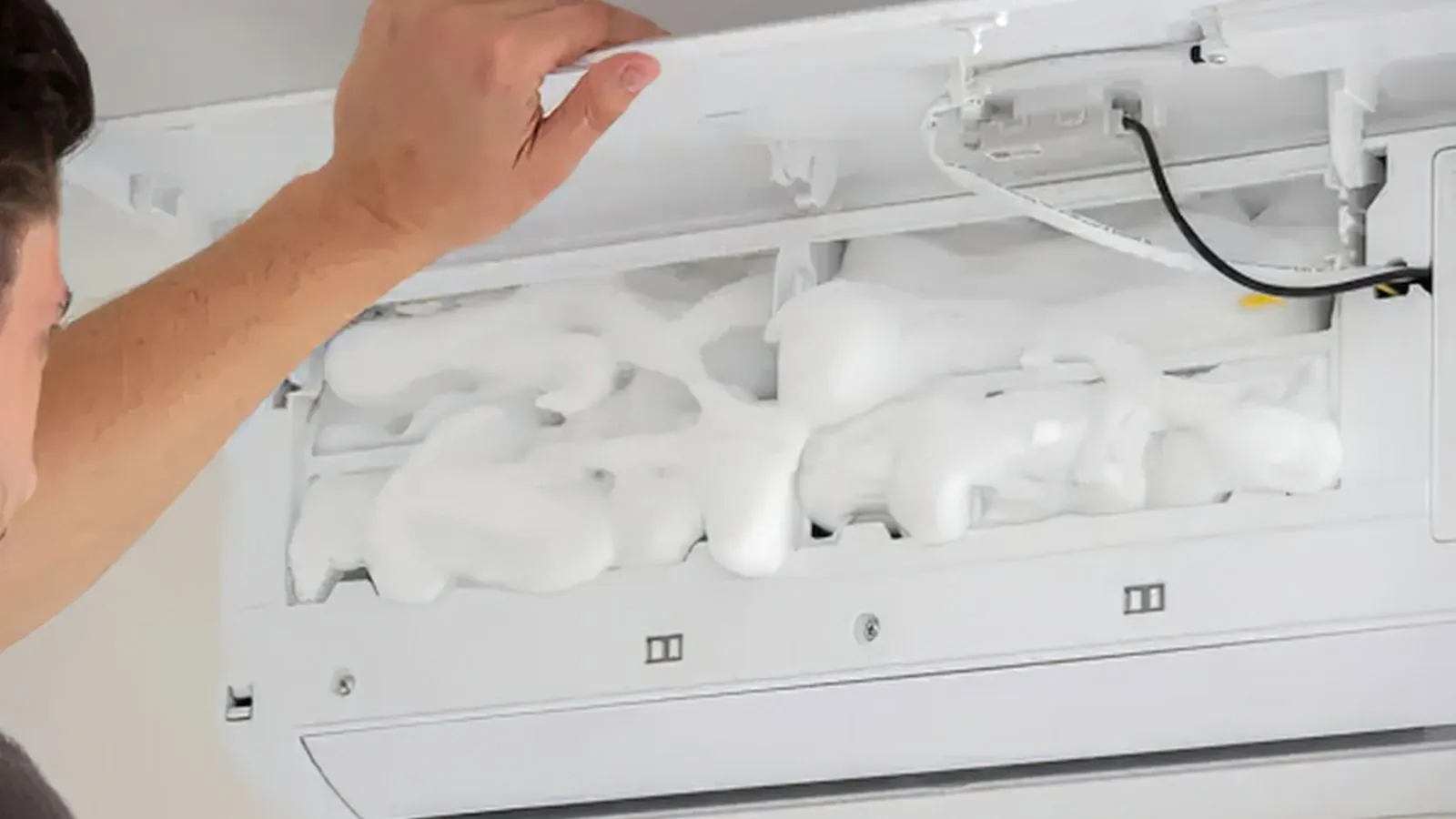
AC leak water damage is the moisture damage caused when an air conditioner or HVAC system releases water into a home, usually through a clogged condensate drain, a cracked drain pan or a frozen evaporator coil that melts. If your system in Wyandotte, MI is leaking, turn it off at the thermostat, dry what you can and call. The dispatch line is open 24/7 if water is spreading.
Air conditioners pull a lot of moisture out of indoor air, and all of it has to go somewhere. In a typical home that water drains through a small PVC line, and when the line clogs, the water backs up into the drain pan and overflows into the ceiling, wall or floor below.
What an HVAC leak looks like
Most AC leaks show as a ceiling stain below an attic air handler, a wet closet floor under an indoor unit or damp drywall near the furnace. The drip is slow, which is why the damage often goes unnoticed for weeks.
A brown ring on a ceiling
The stain appears under the attic unit or along the drain path and grows after the system runs.
Damp drywall near the air handler
A closet wall that feels cool and soft points to a leaking pan or line.
Water in the drain pan
Standing water in the pan means the drain is blocked or the pan is cracked.
Ice on the coil or line
A frozen coil melts into the pan and can overwhelm it.
Turn the system off if you see water, because each running cycle adds more. Shutting it off at the thermostat is safe, and a wet vacuum can pull water from an accessible pan, as long as nothing is in water that touches electrical parts.
Why the line clogs and where the water goes
Condensate lines clog with algae and dust. A float switch is supposed to shut the system off when the pan fills, but those switches fail or are missing in older installations. Frozen coils from low refrigerant or a dirty filter produce a flood of melt water when they thaw.
The water follows gravity and framing. From an attic unit it saturates insulation, then drywall, then drips through a light fixture or the ceiling itself. The ceiling water damage repair page covers that outcome, and the wall and drywall page covers the walls near an air handler.
Water under or around your air handler?
Turn the system off at the thermostat and call. Describe where the water shows up.
How the damage is dried
The crew locates the wet zones with a moisture meter and thermal camera, removes wet insulation, and opens the drywall if it is soft. Air movers and dehumidifiers dry the cavity, and readings are logged until the framing and drywall reach the dry standard. Because the damage is usually slow, the water is often Category 1 or 2, and drying in place is more realistic than on a pipe burst.
Fixing the cause is a separate job. An HVAC technician clears the drain, replaces the pan or float switch and checks the coil. A restoration crew should not repair the system, and an HVAC technician should not be asked to dry the structure.
Preventing a second leak
Treat the drain as maintenance. Flush the line with a vinegar solution once or twice a season, replace the filter on schedule and have a float switch installed on the pan or the line. Michigan summers are shorter than in the South, but the system still runs hard in July and August, and a drain that cleared in June can clog by August.
Some leaks in Wyandotte homes come from older attic units that were retrofitted into houses built decades ago, with condensate lines routed through tight spaces. If the line runs through a finished ceiling, the repair has to include the drywall below it.
Safety steps before anyone starts work: turn the system off at the thermostat, keep wet hands away from the air handler and stay clear of any ceiling that is bulging.
What decides the cost
Duration of the leak
A recent overflow is simple, while weeks of dripping soak insulation and framing.
Area affected
A small ceiling patch costs less than a stained ceiling, wall and closet floor.
Materials
Insulation, drywall, trim and flooring each need their own approach.
Drying time
Attic and closet cavities dry slowly and need targeted equipment.
Rebuild scope
Replacing drywall and repainting is separate from drying.
A sudden overflow is sometimes covered, while a long-term drip from poor maintenance often is not. Policies differ, so read yours and ask your insurer. Keep photos and the HVAC technician's report. For your real number, call (844) 950-6900.
AC leak questions
It can be. If water is running through a ceiling or reaching electrical parts, shut the system off and call, and the 24/7 line is open. A slow drip can wait a short time, but the damage keeps growing.
Often yes, with a wet vacuum on the drain end or a vinegar flush. Persistent clogs, a cracked pan or a frozen coil need an HVAC technician.
It can create the moisture mold needs. Drying the wet materials quickly is the protection.
Both. The HVAC technician fixes the cause, and the restoration crew dries the damage.