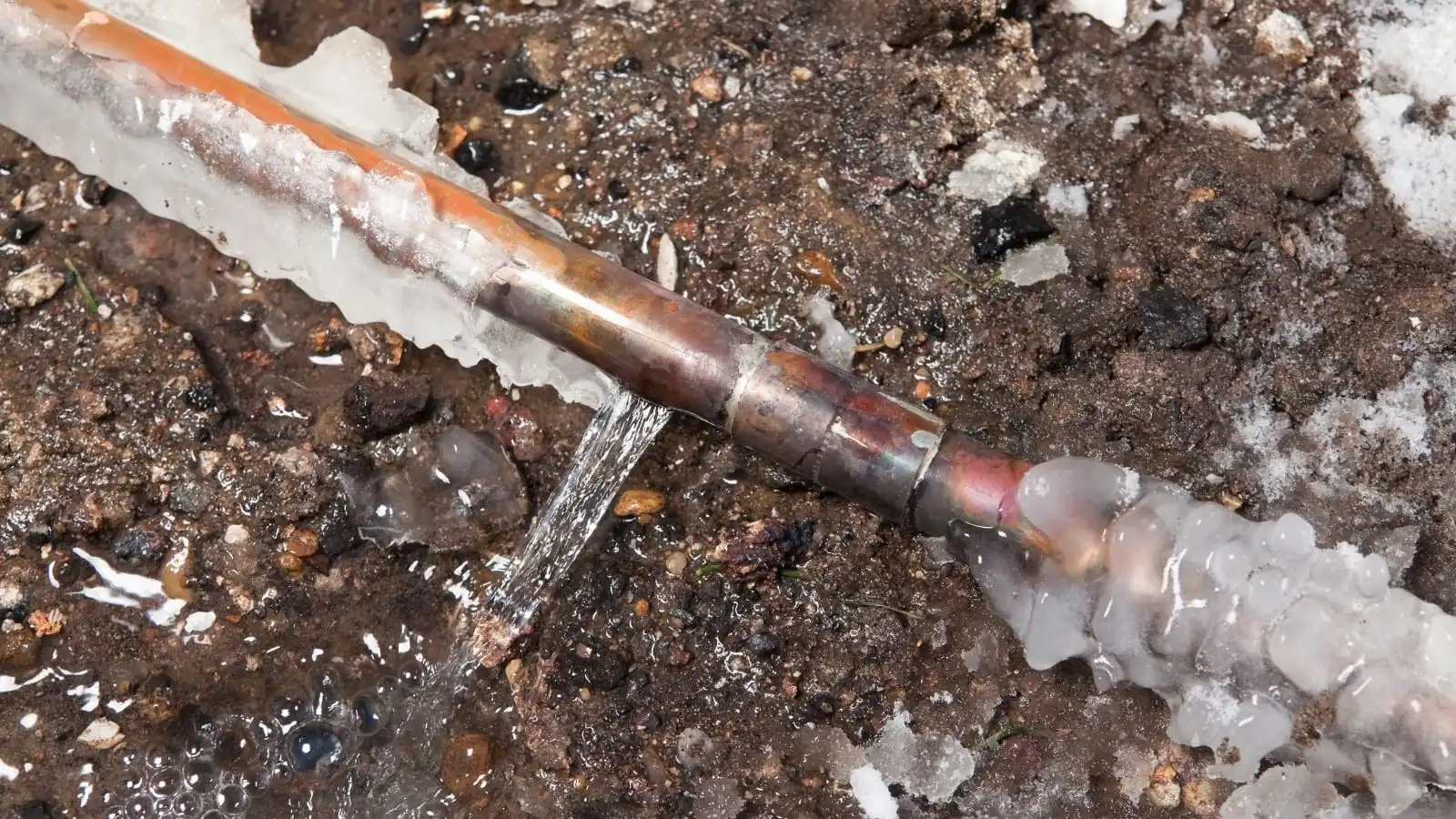
A burst pipe is a supply line that has split or blown a joint, and it keeps pushing water into your walls, floors and ceilings until someone shuts it off. If you are reading this with water running, this is an emergency, and our dispatch line is answered 24/7 for Wyandotte, MI. Shut off the main water valve, step back from any wet electrical outlets and call.
Burst pipe water damage is different from a slow drip because the volume is large and the water is clean at first. Clean supply water is Category 1 under the ANSI/IICRC S500 standard, but it does not stay that way for long. After about 48 hours in porous material it can slide toward Category 2, which changes how the job is done.
When a burst pipe is an emergency
Treat any pipe that is spraying, pouring through a ceiling or soaking a wall cavity as an emergency. A half-inch supply line under normal household pressure can discharge several gallons a minute, and the damage grows while you look for the valve.
- Close the main shutoff, usually where the line enters near the water meter or on the basement wall.
- Open a low faucet to drain pressure, but only if the floor under it is dry.
- Do not step into water near outlets, power strips or appliances. If the panel is in a wet area, stay out and call the electric utility or 911 for any shock risk before calling the restoration line.
- Lift rugs, boxes and furniture legs out of the water and keep children and pets away.
Once the water is off, the goal is to get the structure drying before the water travels. Water moves down through floors, along joists and up into drywall by wicking, so a leak that looks like one wet room often reaches the room below.
Why Wyandotte homes see pipe failures
Wyandotte grew in layers. Glenwood began in the 1890s as New Jerusalem, incorporated as a village in 1900 and was annexed in 1905, and Ford City merged into the city in the early 1920s. Houses from those decades may have older plumbing, so a burst there deserves a look at the pipe material and the neighboring runs, not only the break itself.
The Detroit-area climate adds a second cause. The National Weather Service 1991 to 2020 normals for the area average roughly 45 inches of snow a year, which means unheated garages, exterior walls and crawl spaces see freezing conditions that split pipes. The related page on frozen pipe damage covers that mechanism and what changes when ice is part of the story.
Pipe still running?
Shut the main valve first, then call. The dispatch person will ask what is wet and how long the water ran.
Signs the water went further than you can see
The wet spot you found is rarely the whole loss. Look for these signs that water is still inside the building.
Bubbling or soft drywall
Paint that blisters and a wall that gives under light pressure means the board is saturated behind the surface.
A ceiling stain below the break
A tan ring that grows overnight shows water pooling above and pushing through the drywall.
Warped or cupped flooring
Wood and laminate edges lift as the boards absorb moisture from below.
Musty smell within a day
Odor this fast means wet insulation or cavity material that surface drying will not reach.
How the damage is assessed and dried
The crew starts with moisture meters and a thermal imaging camera to map where the water went, because color on a wall does not match moisture inside it. Standing water comes out with extraction units and submersible pumps. Wet carpet pad is usually removed, and baseboards are often pulled so the wall cavity can breathe.
Then the drying equipment goes in. Air movers push dry air across surfaces, and LGR dehumidifiers pull moisture out of the air so the water has somewhere to go. Readings are taken at the start and every day after, and drying stops when materials reach their dry standard, not when they feel dry. The details of that process are on the structural drying and dehumidification page.
Repair choices and their trade-offs
Not every wet material has to be thrown out, and not every repair has to be big. The honest comparison looks like this.
| Material | Often dried in place | Often removed |
|---|---|---|
| Drywall | Caught within a day, clean water, no swelling | Swollen, crumbling or wet for days |
| Carpet pad | Rarely, because pad holds water | Almost always replaced |
| Hardwood flooring | Caught early, with dry subfloor | Cupped or wet from below for days |
| Insulation | Closed-cell or rigid foam | Batts and loose fill that stay wet |
A pipe that failed in a kitchen wall often takes cabinet bases with it, so kitchen water damage shows how those pieces are handled, and the wall and drywall repair page explains what happens after the structure is dry.
What decides the cost
No honest number comes before someone sees the damage. These are the factors that set the price, and the dispatch person walks through each one before work starts.
Water category
Clean supply water costs less to handle than water that has sat or passed through contaminated materials.
Affected area
The number of rooms and floors the water reached, including the level below the break.
Materials involved
Drywall, carpet pad, hardwood and insulation each have different dry-or-remove thresholds.
Drying days and equipment
More wet material and tighter spaces mean more air movers, more dehumidifiers and more days.
Rebuild scope
Drying is one job and replacing removed drywall, trim and flooring is another.
Sudden and accidental water damage, such as a pipe that suddenly bursts, is often covered. A leak that dripped for months and was ignored often is not. Check your policy or ask your insurer, and take photos before anything is moved. Want your real number? Call (844) 950-6900.
What Wyandotte property owners should know
Wyandotte Municipal Services, the community-owned utility that has run the city's water system since 1889, is the first call to ask where its responsibility ends for your address. Repairs on your own plumbing are yours to arrange, and the Engineering and Building Department can tell you whether the work needs a permit. The restoration crew works around the plumber, so the order is: stop the water, call a plumber for the repair and call the line for the drying.
If the pipe let go in a lower level and the water is pooling around a sump or floor drain, the basement water damage page covers that situation in more detail.
Burst pipe questions
Yes. The dispatch line is answered 24 hours a day, every day, so a pipe that bursts at 2 a.m. gets the same call-answering as one at noon. Shut off the water and describe what you see, and the line will tell you what to do while a crew is arranged. Same-day response is available when crews are free.
Call both, but shut off the main valve before either call. The plumber fixes the pipe and the restoration crew removes the water and dries the structure. Neither job waits on the other for long.
Materials start absorbing moisture within minutes, and mold growth becomes a risk if wet materials stay wet for roughly 24 to 48 hours. That window is why the first call matters more than the first cleanup.
Sudden and accidental pipe failures are often covered, but policies differ and exclusions apply. Read your policy, report the loss quickly and keep your photos and moisture readings.