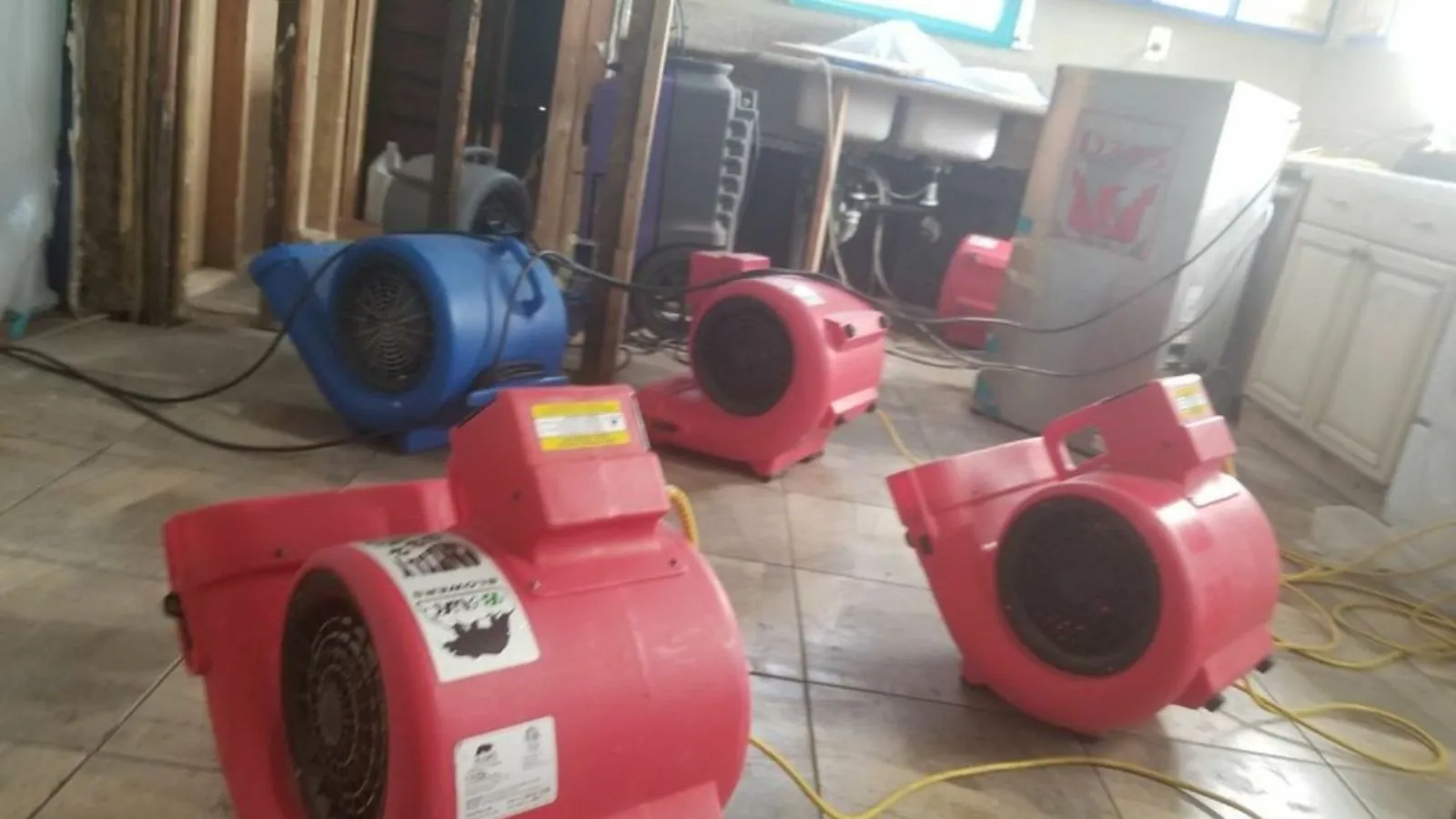
Wall and drywall water damage is moisture that soaks gypsum board, insulation and framing inside a wall after a leak, a roof problem or a flood. If a wall in your Wyandotte, MI home is stained, bubbling or soft, stop the water source and call. The 24/7 dispatch line is open if water is still moving.
Drywall is paper wrapped around gypsum, and both materials absorb water quickly. Water wicks upward from a wet base, and a spill at the floor can climb a foot or more into the wall. Insulation and framing behind the board hold the water long after the surface looks dry.
Reading the wall
Signs of a wet wall are usually visible if you know what to look for.
Brown or yellow stains
Water has passed through the board, and the stain often has a darker ring at the edge.
Bubbling or peeling paint
Moisture is pushing the paint off the surface from behind.
Soft or crumbling board
The gypsum has lost its strength, and the board usually needs to be cut out.
Warped baseboard or trim
Water has reached the bottom of the wall and the trim is absorbing it.
A cool, damp feel
The wall holds moisture even if nothing is visible.
A moisture meter and a thermal camera find the wet area faster than guessing, and they show the edge of the wet zone so cuts are made only where needed.
Cut or dry in place?
The decision depends on the water type, the time and the material. Clean water on firm drywall caught within a day can be dried in place with small holes or a cut at the base to move air. Soft, stained or crumbling board is cut out, as is any wall with insulation that has soaked through.
Contaminated water changes the answer. If sewage or flood water reached the wall, the board and insulation are removed at least above the water line, as the sewage backup and flood damage pages explain.
| Condition | Usual path |
|---|---|
| Clean water, firm board, caught early | Dry in place with access holes |
| Soft, stained or bubbled board | Cut out and replace |
| Wet insulation | Removed and replaced |
| Contaminated water | Remove board and insulation, clean, disinfect |
| Plaster walls | Dry carefully, repair or replace sections |
Wall wet or stained?
Stop the water source and call. Tell the line how high the stain reaches and whether the wall feels soft.
Why cavities matter
A wall is a closed box. Without opening it, air cannot reach the studs and insulation inside, and wet material can sit for weeks. That is why crews pull baseboards, drill small holes or remove a strip of board at the bottom. Drying the cavity is what stops odors and prevents the moisture mold needs. The full method is described on the structural drying page.
Walls near water sources, such as sinks, tubs, an air handler or a roof edge, get the most attention. If the wall is near an air handler, the AC leak page covers that cause, and a ceiling stain above a wall is covered on the ceiling water damage page.
Walls in Wyandotte homes
Many Wyandotte houses were built before drywall was universal, and older homes may have plaster and lath behind later layers. Plaster dries differently, and it can crumble or lose its bond when wet, so it is evaluated by hand and by meter. If you plan a repair, ask the Engineering and Building Department whether the work needs a permit, especially if electrical work is exposed when the wall is opened.
Wyandotte's electrical code adopts the 2023 National Electrical Code, so any wiring disturbed behind a wall is subject to the city's rules. A wet outlet is not something to reset or reuse without an electrician's check.
Decisions about cutting or drying a wall follow the water categories in the ANSI/IICRC S500 standard.
What decides the cost
Wet height and length
A small stain costs less than a wall wet to the top.
Insulation and framing
Wet insulation is replaced, and framing is dried.
Water type
Clean water allows drying in place, contaminated water does not.
Finish level
Texture, paint and trim matching add to the rebuild.
Wall systems
Plaster, tile backer and exterior walls each add steps.
Sudden leaks that damage walls are often covered, while slow seepage and wear often are not. Photograph the wall and keep the failed part if possible. Check your policy and ask your insurer. For your real number, call (844) 950-6900.
Wall and drywall questions
If water is still running or the wall is soft, yes, and the 24/7 line is open. A dry old stain is less urgent, but it should be checked.
Painting hides the stain but not the cause. Find and fix the leak, confirm the wall is dry, and then repaint.
Often a small opening at the base is enough. Large cuts are for soft, stained or contaminated board.
Wet drywall can support growth, which is why drying quickly matters.