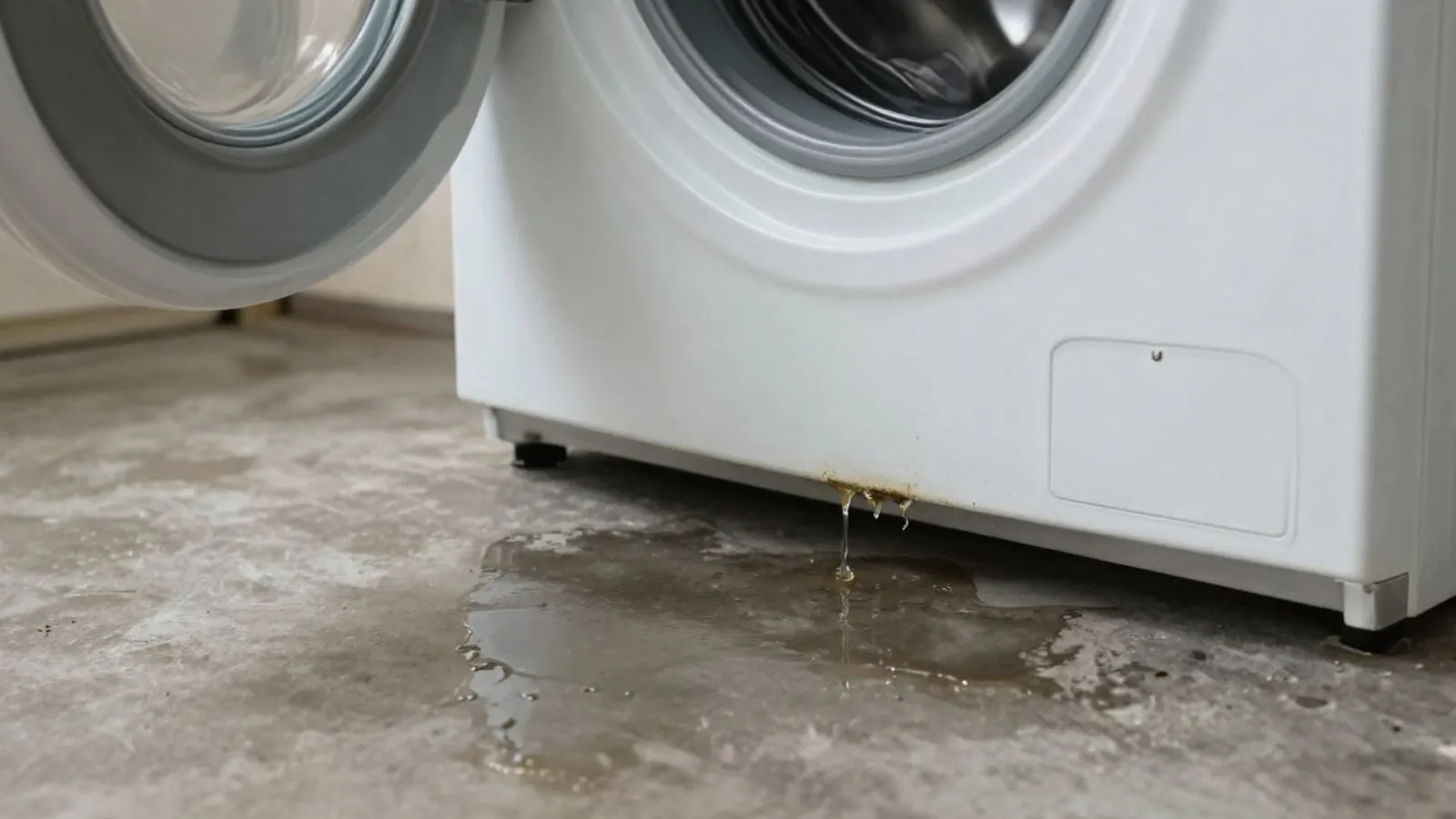
An appliance leak is water released by a washing machine, dishwasher, refrigerator ice maker, water softener or similar equipment when a hose, valve or drain line fails. If an appliance in your Wyandotte, MI home is leaking right now, this is an emergency, and our 24/7 dispatch line is open. Close the supply valve behind the appliance, unplug it only if the cord and floor are dry, and call.
Appliance leaks are different from pipe bursts because the source is smaller and the damage is usually hidden. A pinhole in a refrigerator line can drip behind a wall for months, while a washing machine hose can release gallons in minutes. The two cases look very different on the floor.
When an appliance leak is an emergency
A leak that is running, spreading across a floor or reaching an outlet is an emergency. A slow drip under a dishwasher is not an emergency today, but it can be tomorrow.
- Find the shutoff valve behind or beside the appliance and close it. For a washer, that is two valves, hot and cold.
- If you cannot reach the valve without standing in water, shut the main water supply to the house instead.
- Unplug the appliance only if the outlet and floor are dry. Never touch a plugged-in appliance while standing in water.
- Move rugs, boxes and cabinet contents out of the water and photograph everything.
After the water is off, the question is how far it traveled. Water follows the floor to the lowest point, under baseboards and cabinets and through flooring seams, so the visible puddle understates the loss.
What fails and why
The failure points are predictable. Rubber supply hoses crack and burst, rubber seals and gaskets wear out, drain lines clog and overflow, and ice maker lines loosen or split. Appliances on upper floors cause the worst damage because water drains through the floor into rooms below.
| Appliance | Common failure | Typical damage |
|---|---|---|
| Washing machine | Burst supply hose, drain overflow | Floor, subfloor, ceiling below |
| Dishwasher | Door seal, supply line, drain hose | Cabinet base, flooring, wall |
| Refrigerator | Ice maker line, water filter | Hidden wall and floor damage |
| Water softener | Brine line, fittings | Basement floor, nearby walls |
If an upstairs washer failed, water often shows up as a stain on the ceiling below, and the ceiling water damage page explains what happens next. When the water also reached cabinets and flooring in a kitchen, the kitchen water damage page covers that part.
Appliance still leaking?
Shut the supply valve behind it, then call. Describe the appliance and how long it ran.
How the cleanup works
The crew checks readings in the floor, the wall base and the cabinets with moisture meters, then removes standing water. Baseboards are often pulled and small holes drilled behind them so air can reach the wall cavity. Wet insulation and soaked flooring that cannot dry are removed.
Drying follows with air movers and dehumidifiers, and readings are logged until the materials return to normal. This is the same process described on the structural drying page, scaled to the size of the loss.
Wyandotte homes and older plumbing
Wyandotte's neighborhoods were built over many decades, and its elementary schools alone date from 1929 to 1956, a sign of how much of the housing grew in those years. Older homes often have older shutoff valves that seize when you need them, so test the valves behind your washer and under your sinks once a year, before an emergency.
Wyandotte Municipal Services supplies the city's water, and your water bill can show a leak long before you see one. A sudden jump with no change in use is a reason to check appliances and supply lines. The Engineering and Building Department can tell you whether replacing a line or fixture needs a permit.
Wet-floor and appliance terms on this page follow the ANSI/IICRC S500 standard for water categories.
What decides the cost
Appliance and source
A hose that ran for minutes costs less than a line that leaked for weeks.
Water category
Clean supply water is simpler than dishwasher drain water or a refrigerator that held spoiled food.
Floor area and layers
Subfloor, flooring and cabinets add to removal and drying.
Hidden damage
Water behind walls and under cabinets needs more access work.
Rebuild scope
Replacing flooring, baseboard and drywall is separate from drying.
Sudden failures, such as a burst hose, are often covered. Long-term leaks and wear are often excluded, and the appliance itself is usually not covered under the water damage portion of a homeowners policy. Check your policy and ask your insurer. For your real number, call (844) 950-6900.
Appliance leak questions
Yes. The dispatch line is open 24 hours a day, every day. Call, name the appliance and describe where the water went, and you will hear what to do while a crew is arranged. Same-day response is available when crews are free.
Stop the water first, then dry. Replacing the appliance can wait, but the wet floor and walls should not.
Yes. A slow line leak can soak the subfloor and cabinets for months before it shows. Soft flooring, a musty smell or a stain under the fridge are the signs.
Usually the policy covers resulting water damage, not the failed appliance. Policies differ, so ask your insurer.