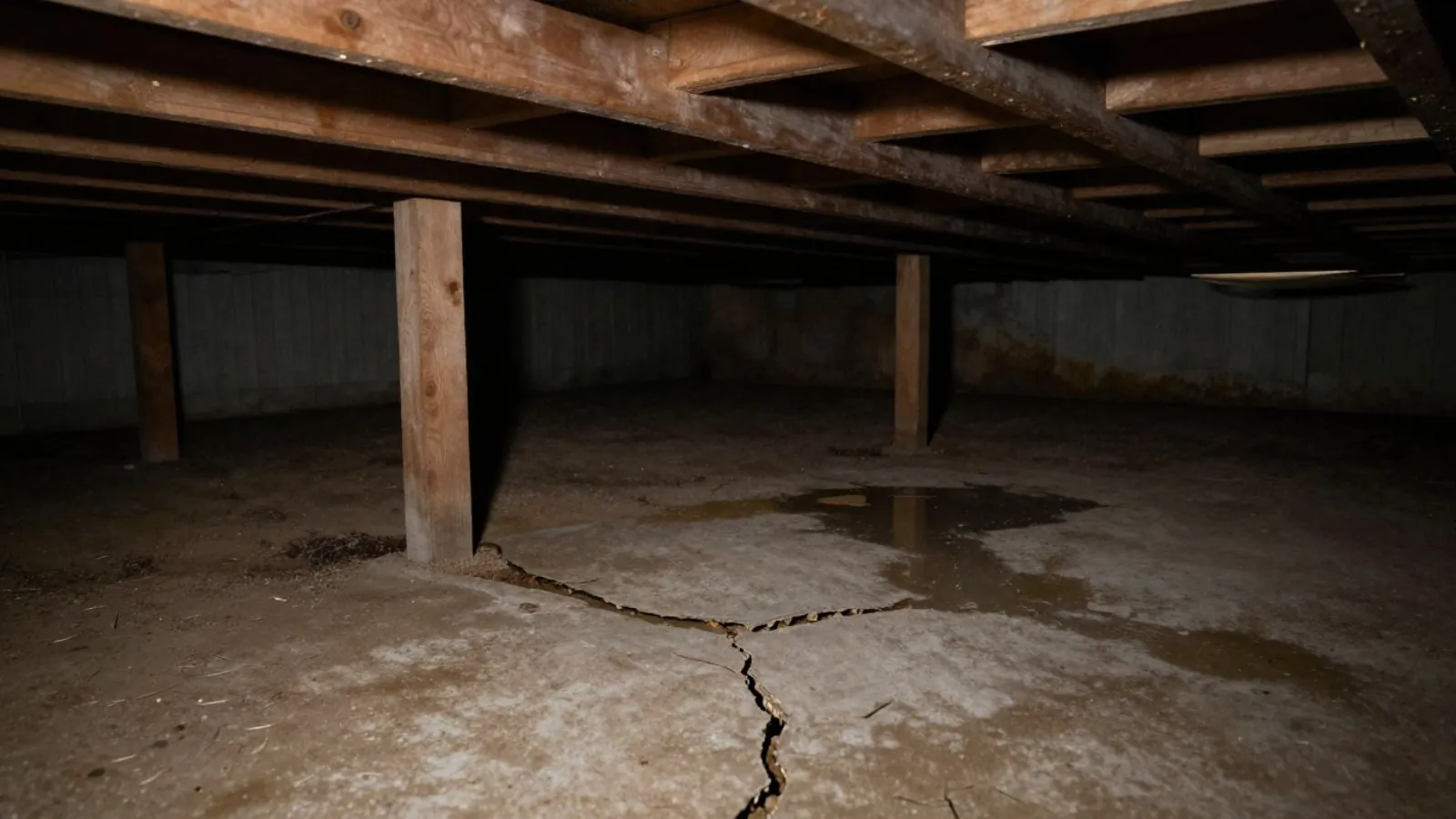
Crawl space water damage is moisture damage in the shallow space between the ground and the first floor of a home, usually from groundwater, a plumbing leak, poor drainage or humid air. If your Wyandotte, MI crawl space has standing water, wet insulation or a musty smell, call, and do not enter if water is near wiring. The 24/7 line is open if the water is rising.
A crawl space is a hidden part of the house. Water that sits there soaks the subfloor, insulation and joists above, and the damp air can move upward into the living area. Because it is out of sight, the damage often runs a long time.
Why crawl spaces get wet
The water usually comes from one of four sources. Plumbing lines run through crawl spaces and can leak for months. Groundwater can seep in after heavy rain, especially where grading slopes toward the foundation. Gutters and downspouts that empty near the wall send roof water to the same spot. Humid summer air can condense on cool surfaces and soak insulation without any leak at all.
The distinction matters because it decides the fix. A plumbing leak needs a plumber, groundwater needs drainage and grading work, and condensation needs ventilation or moisture control. Drying alone will not stop a wet crawl space from refilling.
Standing water or mud
Groundwater or a leak is reaching the space.
Sagging or dark insulation
It has absorbed water and may have fallen.
A musty smell inside the house
Damp air from below is entering the living space.
Cold, soft or stained floors
The subfloor above is wet.
Condensation on ducts or pipes
Humid air is reaching cool surfaces.
What the cleanup involves
Before work begins, the crew checks for electrical hazards, especially wiring and a furnace or water heater near the water. Standing water is pumped out, and wet insulation is removed and bagged. Joists and the subfloor are measured with a moisture meter and dried with air movers and dehumidifiers placed to move air through the space.
If the water was groundwater or sewage, it is handled as contaminated, as described on the flood damage and sewage backup pages. Wet floors above a crawl space also need attention, and the hardwood and carpet pages explain how those materials are handled.
| Material | Usual result |
|---|---|
| Fiberglass insulation, wet | Removed and replaced |
| Subfloor and joists | Dried and tested, replaced if soft |
| Vapor barrier on the ground | Cleaned, repaired or replaced |
| Ducts and pipes | Cleaned and checked |
Water standing under the house?
Stay out of the crawl space if it is wet or electrical items are near the water. Call and describe what you can see from the access.
Crawl spaces in Wyandotte
Wyandotte sits on the Detroit River, and the Ecorse River runs along its northern edge, so groundwater is part of the landscape. Heavy rain, like the August 2014 storm that brought four to six inches in about four hours, can push water into low spaces across the area. NWS Detroit's 1991 to 2020 normals put annual precipitation near 34 inches, enough to keep drainage in mind for any below-floor space.
Without a local survey of how many homes have crawl spaces, the guidance here stays general. If your house has one, look at the grading outside, check the downspouts, and look inside the access door once a season. The Engineering and Building Department can tell you whether drainage or foundation work needs a permit.
Keeping it dry afterward
After drying, fix the source. A plumber repairs leaks, a landscaper or contractor corrects grading, and downspout extensions move roof water away from the wall. A sump pump in the crawl space helps in some homes, and a ground vapor barrier slows moisture from the soil. A dehumidifier sized for the space can control humid air.
Crawl space work is guided by the ANSI/IICRC S500 standard, which also sets the rules for treating groundwater as contaminated.
What decides the cost
Water volume and source
A plumbing leak is simpler than groundwater that returns with rain.
Access
A tight crawl space is slower to work in than a roomy one.
Insulation and subfloor
Wet insulation is removed, and soft subfloor adds work.
Contamination
Groundwater and sewage need extra steps.
Rebuild scope
New insulation, vapor barrier and drainage work are separate from drying.
Sudden plumbing leaks that wet a crawl space are often covered, while groundwater seepage and long-term humidity are often excluded. Photograph the space before cleanup. Check your policy and ask your insurer. For your real number, call (844) 950-6900.
Crawl space questions
If it is rising or near wiring, yes, and the 24/7 line is open. A small damp area is less urgent, but it should be handled within days.
Only if the space is dry and the wiring is safe. Standing water near electrical items is a hazard.
It controls humid air but not a leak or groundwater. Find and fix the source first.
Usually yes. Wet fiberglass loses its value and holds moisture against the floor.