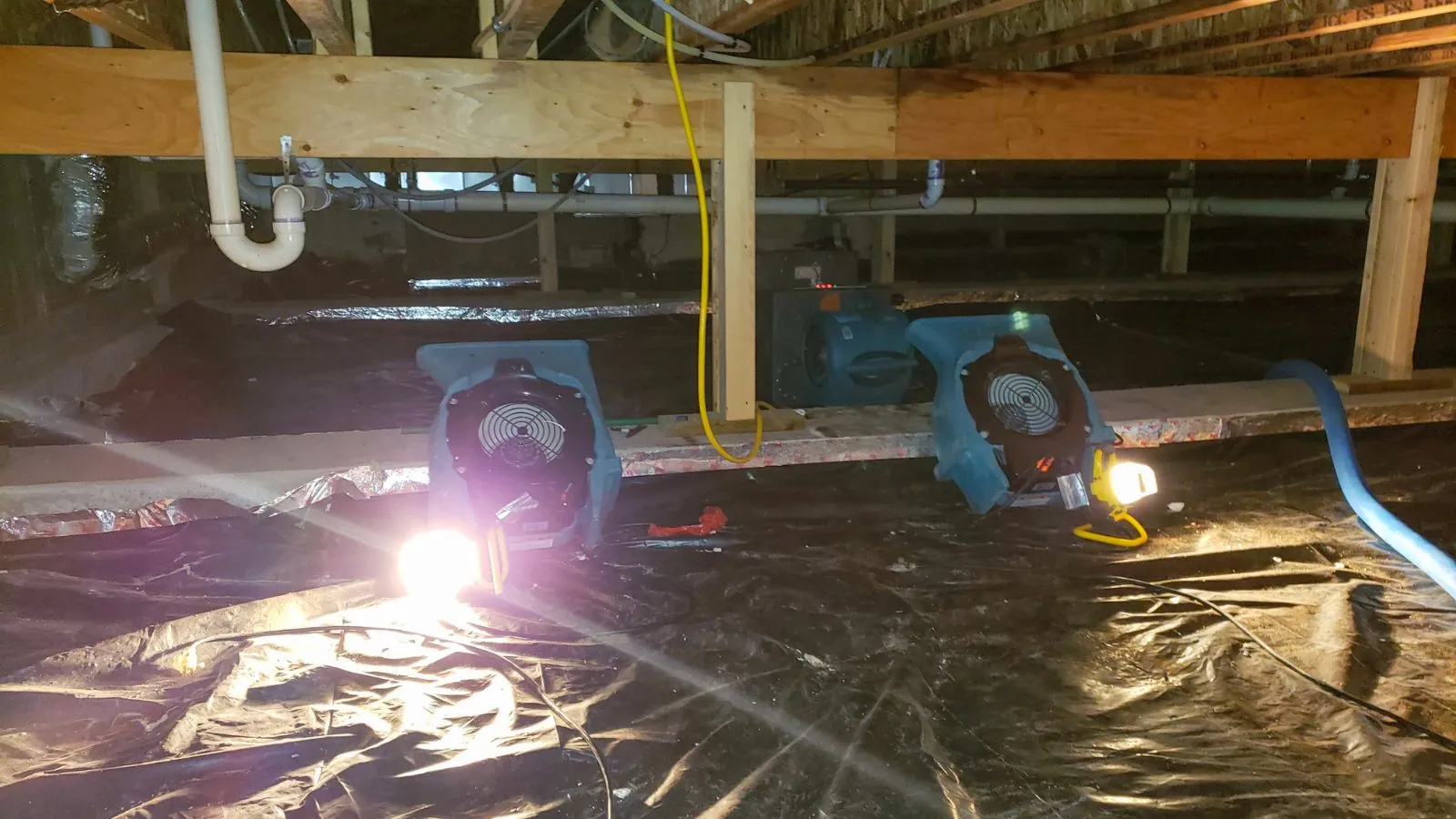
Water extraction is the removal of standing water from floors, carpet and low spaces using pumps and wet vacuums, and it is the first step of nearly every water loss. If water is standing in your home in Wyandotte, MI, this is an emergency, and the 24/7 dispatch line is open now. Stay out of the water if outlets, cords or appliances are in it, and call before you start moving things.
Extraction is not drying. Pulling the free water out is the fast part, and it stops the damage from spreading. The materials still hold moisture afterward, which is why drying follows as a separate step.
When standing water is an emergency
Water that is deeper than the baseboard, spreading toward another room or touching anything electrical is an emergency. The depth matters less than the surfaces it reaches, because one inch over a whole carpeted floor is hundreds of gallons.
- Do not walk through water that touches outlets, extension cords or a wet panel. If the panel is in the water, stay out and call the utility or 911.
- Do not use a household vacuum on water. Use only equipment made for wet pickup.
- If the water came from a toilet, drain or sewer, treat it as contaminated and leave it for trained crews.
- Turn off the water source if you can find it, and photograph the water line on the walls before it drops.
Where it came from decides how the job is handled. Clean supply water, rain through a roof and groundwater each start in a different category and get different handling, which is why the first question on the call is always the source.
How extraction works
Small jobs use portable pumps and wet vacuums. A submersible pump handles water more than an inch or two deep, and truck-mounted extraction handles large areas of carpet and thick pad. An extraction wand with a weighted head presses water out of carpet fibers, and the pad underneath is either extracted from above or lifted and removed.
The crew works from the lowest point outward, so water does not drain back into cleared spaces. Hard floors get squeegeed to drains or pump points. Water left in toe-kicks and under cabinets gets pulled with small hand tools, since those are the places that stay wet and smell later.
| Surface | Extraction method | What often follows |
|---|---|---|
| Carpet over pad | Weighted wand, truck-mounted unit | Pad removed, carpet lifted and dried |
| Hard floor | Squeegee and wet vacuum | Floor and baseboard moisture check |
| Basement slab | Submersible pump, wet vacuum | Wall base and drain area drying |
| Crawl space | Small pumps, hand tools | Vapor barrier and joist drying |
Standing water on the floor?
Call before you start bailing. The dispatch person will tell you what is safe to do and what to leave alone.
What happens in Wyandotte after a heavy rain
The Detroit River forms the city's eastern edge and the Ecorse River touches the northern boundary, so a large share of the city sits low and close to water. When the August 2014 storm hit, FEMA's declaration for DR-4195 included Wayne County, which shows how a single regional rain can put water in basements across the area.
Rain events are not the only cause. A failed sump pump or a stopped floor drain can put water on a basement floor with no storm at all, and the basement water damage page covers the below-grade version of this problem. If the water is rising from outside the house, the flood damage cleanup page is the closer match.
After the water is out
Extraction removes the visible water, not the water inside materials. Moisture meters and a thermal camera show what is still wet, and the crew sets air movers and dehumidifiers to finish the job. Readings are logged each day so you can see the numbers fall.
If the water sat for more than a day, expect more removal and not just drying. Wet insulation, baseboard and the lower few inches of drywall are often cut out so the wall cavity can dry. The carpet water damage page explains the call between saving and replacing carpet.
Extraction methods and the three water categories come from the ANSI/IICRC S500 standard for professional water damage restoration.
What decides the cost
Extraction pricing is set by what is in the water and how much of it there is. The dispatch person goes through these before work starts.
Depth and area
More square footage and deeper water mean more pump time and more passes with the wand.
Water category
Clean water is simpler than water carrying soil, sewage or chemicals.
Access
Finished basements, crawl spaces and tight rooms need smaller equipment and more labor.
Materials
Carpet and pad, hardwood, drywall and insulation each need different handling afterward.
Follow-on drying
Most jobs continue into drying, and that adds days and equipment.
Sudden and accidental water, like a failed appliance or a burst line, is often covered. Gradual seepage often is not, and flood damage is usually excluded unless you carry separate flood coverage. Check your policy, take photos of the water line and keep your receipts. For your real number, call (844) 950-6900.
Questions about extraction
Yes. The dispatch line is open 24 hours a day, every day of the year. Call, describe the depth and what is wet, and you will hear what to do while a crew is arranged. Same-day response is available when crews are free.
For a small clean spill, a wet vacuum is fine. For anything deeper or wider, or anything near electrical equipment, professional equipment is faster and safer, and the moisture readings afterward tell you what is still wet.
No. Extraction removes the free water and drying removes the moisture held in materials. Skipping the second step is how wet drywall and subfloors turn into mold problems weeks later.
As fast as possible. Carpet pad and drywall begin to absorb right away, and the safe window for saving materials gets shorter every hour.