Carpet water damage is moisture trapped in carpet fibers, the pad underneath and the subfloor below. If the carpet in your Wyandotte, MI home is wet, stop the source and call. The 24/7 dispatch line is open, and the hours that follow decide whether the carpet is dried in place or removed.
Carpet looks simple, but it is actually three layers. The surface fibers, the pad and the subfloor all hold water differently, and each needs its own treatment. The top dries fast, the pad holds water like a sponge, and the subfloor can stay wet for days.
The water type decides everything
The first question a crew asks is where the water came from. Under the ANSI/IICRC S500 standard, water is rated by category, and the category controls what can be saved.
| Water source | Category | Carpet outcome |
|---|---|---|
| Supply line, clean tap water | 1 | Often dried in place if fast |
| Dishwasher or washer drain, sump overflow | 2 | Carpet may be cleaned, pad usually replaced |
| Sewage, river or storm water | 3 | Carpet and pad removed |
| Clean water left for days | Can degrade to 2 or 3 | Condition decides |
This is why the story matters. A burst supply line caught within a day gives carpet a good chance, while the same carpet sitting wet for several days is a different problem. Sewage or flood water through carpet is a removal job, as described on the sewage backup and flood damage pages.
Saving carpet versus replacing it
When the water is clean and the loss is recent, crews often save the carpet and replace the pad. The carpet is lifted at a corner, the pad is removed and the carpet is dried on racks or lifted with air flow underneath. Replacing the pad is far cheaper than replacing the carpet, and a wet pad cannot be dried reliably.
Carpet that has been wet for days, has delaminated backing or smells musty is usually removed. Stretching a dried carpet back down is a separate step and is done by a flooring installer after drying is complete.
- Turn off the water source and unplug nearby electronics if the floor is dry around the outlet.
- Do not walk on soaked carpet more than needed, since it spreads water and wears fibers.
- Lift furniture off the carpet and put foil or plastic under the legs.
- Do not use a household vacuum on wet carpet.
- Photograph the wet area before anything is moved.
Carpet soaked right now?
Stop the source, keep people off the wet carpet and call. Tell the line what kind of water it was.
How drying works
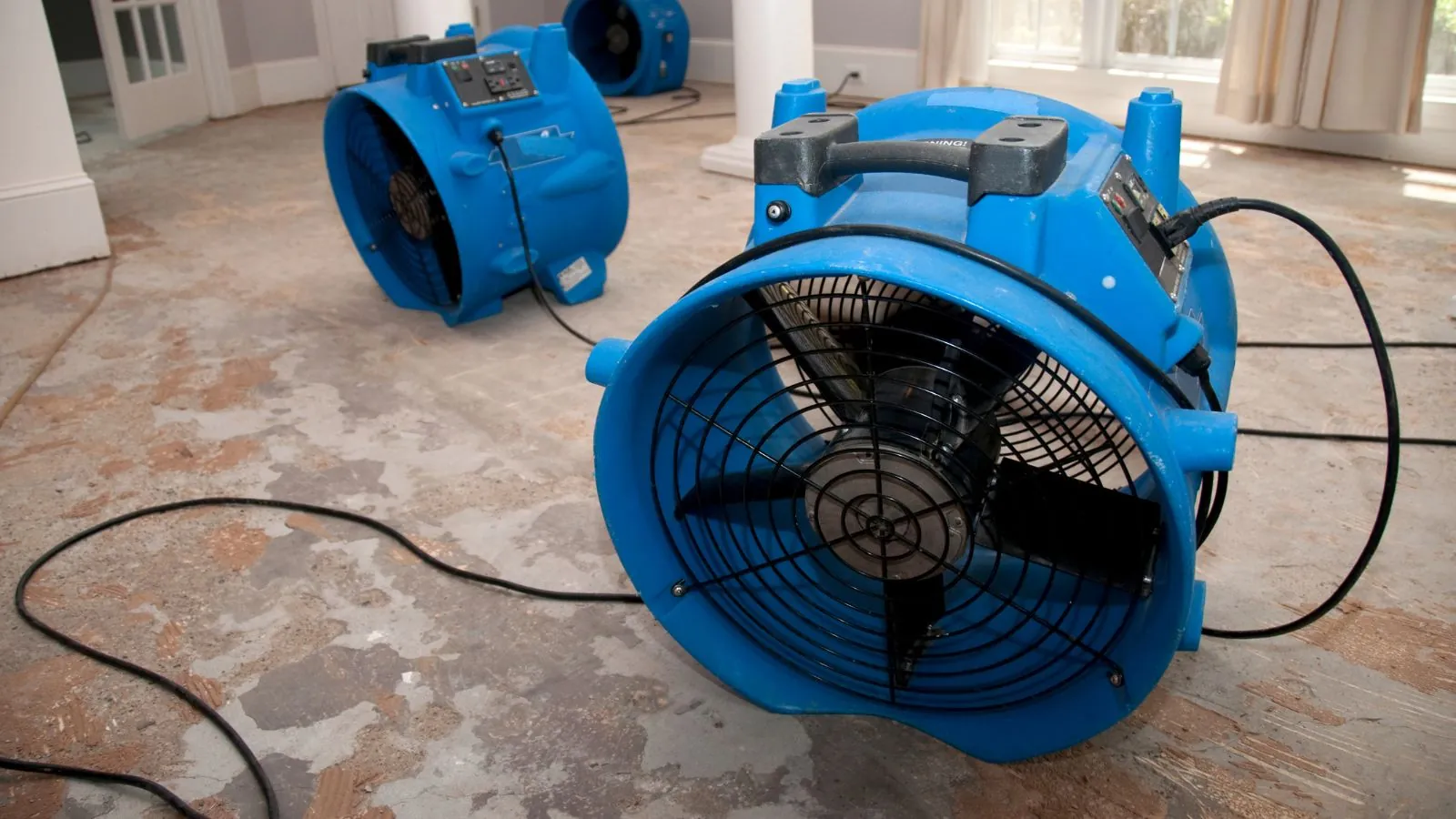
The crew extracts water with a truck-mounted or portable extractor, then pulls the pad, drops the carpet to a drying position and sets air movers and dehumidifiers. Moisture meters check the subfloor and tack strips, which are the wooden strips at the edge that hold the carpet. Tack strips and baseboards can hold water for days.
The room is then dried until readings reach normal, and the process follows the steps on the structural drying page. If the room is a finished basement, the basement water damage page explains why carpet below grade is often a harder case.
Carpet in Wyandotte homes
Wyandotte's older homes often have carpet laid over hardwood or plank subfloors, and a carpet removed after a leak can reveal flooring worth saving. Basements in the city sit close to the Detroit River and the Ecorse River, and the 2014 storm that FEMA declared a disaster in Wayne County left finished basements wet across the region. Below-grade carpet is more exposed to groundwater and sewer backup than carpet upstairs.
If you plan to replace carpet, ask the installer to check the subfloor for moisture first. Installing new carpet over a damp floor traps moisture.
What decides the cost
Area and water type
Clean water on one room costs far less than contaminated water through several.
Pad and carpet
Replacing pad is routine, replacing carpet adds more.
Time wet
Fresh water gives more options than water left for days.
Subfloor and tack strips
Wet subflooring adds drying time and sometimes replacement.
Rebuild scope
Stretching, re-laying or new carpet is separate from drying.
Carpet losses from sudden events are often covered, while seepage and flood are often excluded. Photograph the carpet, the pad and any receipts, then check your policy and ask your insurer. For your real number, call (844) 950-6900.
Carpet questions
If water is still spreading or the water was contaminated, yes, and the 24/7 line is open. Even clean water needs action within a day to avoid odors and replacement.
Sometimes, with clean water and fast action. The pad is usually pulled and replaced, even when the carpet is kept.
Odors can start within a day or two in warm, damp conditions. Drying quickly is the best prevention.
You can lift a corner to check the pad, but let the crew handle large areas so nothing is torn or contaminated.