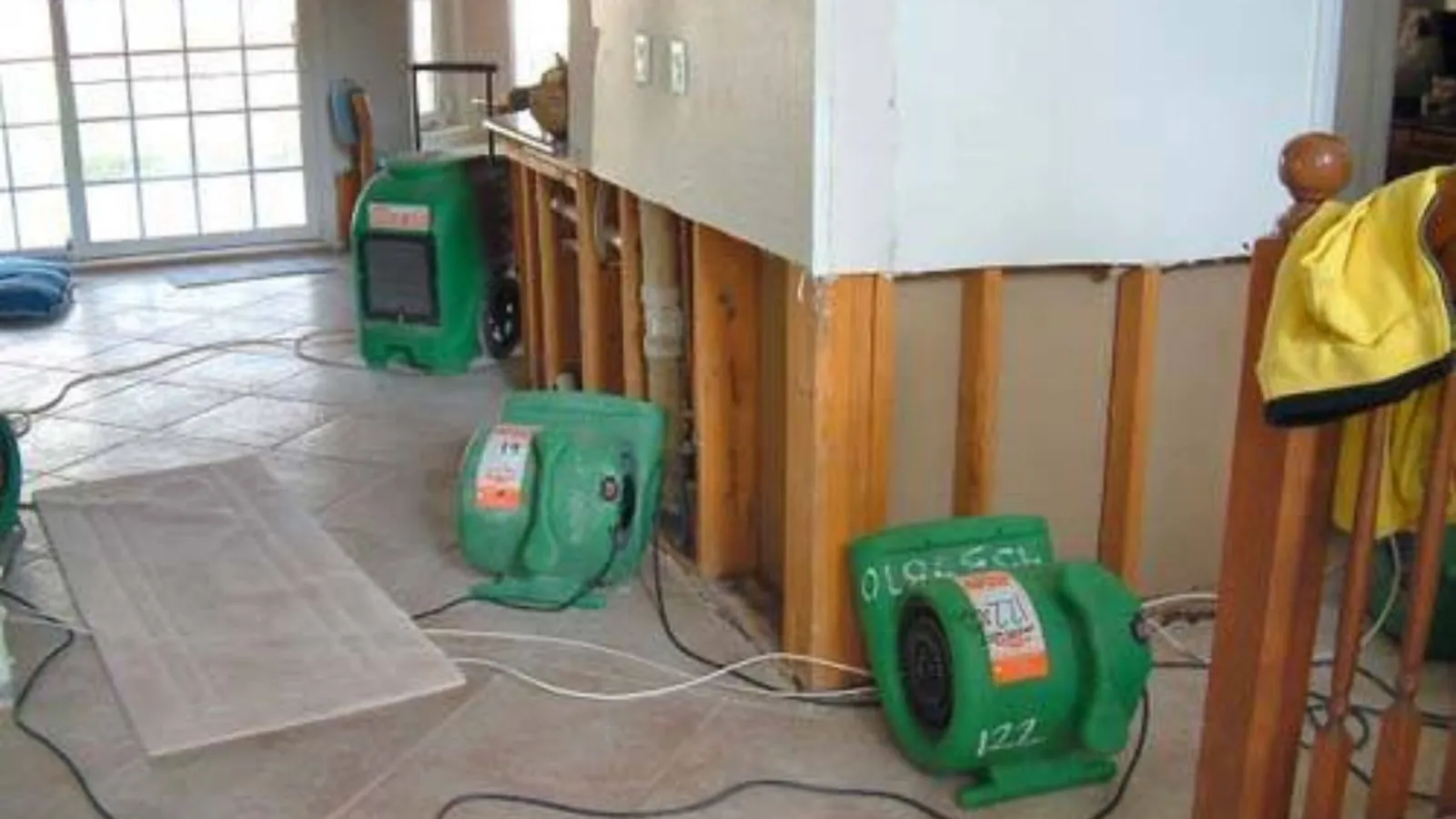
Basement water damage is water that enters or collects below ground level, from a failed sump pump, seepage through walls, a backed-up floor drain or a supply line that let go. If your basement in Wyandotte, MI has water in it, this is an emergency, and our 24/7 dispatch line is open. Stay off the stairs if the electrical panel or outlets are wet, and call.
Basements deserve their own page because below-grade damage behaves differently. Water drains toward the lowest point, concrete and block hold moisture, and a finished lower level hides wet wall cavities behind paneling and drywall.
When a wet basement is an emergency
Water on the floor that is spreading, rising or touching stored electrical gear is an emergency. So is any water from a floor drain, because that source may be contaminated.
- If the water is deep enough to reach outlets, the furnace or the panel, do not enter. Call the utility or 911 for any electrical risk first.
- If the water came up through a floor drain or toilet, treat it as sewage and stay out of it.
- Unplug nothing in the water. Cut power at the panel only if the panel is on a dry floor.
- Move items up from the floor from the top of the stairs if possible, and photograph the water line.
If the sump pump is running and the pit is overflowing, the cause may be an outage, a failed float or inflow that is simply more than the pump can move. A plumber or sump specialist fixes the pump, and the restoration crew handles the water already inside.
Why basements flood in this part of Michigan
Wyandotte lies along the Detroit River, and the National Weather Service Detroit-area normals show about 34 inches of precipitation a year across 1991 to 2020. Rain, snowmelt and a high water table can push groundwater against below-grade walls, and a regional storm like the August 2014 event, which FEMA declared a disaster for Wayne County under DR-4195, can overwhelm sumps and storm drains together.
A second cause is the sewer system. Michigan's Public Act 222 of 2001 gives property owners a path to claim against a municipality for certain sewage backups, and it requires written notice within 45 days of discovering the damage. If sewer water came into your basement, document it and read the sewage backup page for the safety side.
Water on the basement floor?
Stay off wet stairs and away from the panel if it is down there. Call and describe how deep the water is.
Unfinished and finished basements
An unfinished basement with a concrete floor is the simpler case. Water is pumped out, the floor and wall base are cleaned and dried, and stored boxes are sorted. Cardboard and fabric that sat in water are usually discarded.
A finished basement is harder because drywall, carpet, framing and insulation all hold water. The crew opens the base of the walls, often cutting two feet up, so wet insulation can come out and the cavity can dry. The wall and drywall repair page explains how those cuts are made and repaired, and the carpet water damage page covers whether basement carpet survives.
| Basement type | Common damage | Typical approach |
|---|---|---|
| Unfinished concrete | Wet floor, stored goods, wall base | Pump, clean, dry, discard soaked boxes |
| Finished with carpet | Pad and carpet soaked, drywall wicking | Pad removal, wall base cuts, full drying |
| Finished with flooring | Floor lifting, trim wet | Lift flooring, dry subfloor |
| Laundry or utility area | Appliance and water heater exposure | Check equipment, dry and sanitize |
How the cleanup runs
The sequence is extraction, then removal of materials that cannot be dried, then structural drying with air movers and LGR or desiccant dehumidifiers. Basement drying often takes longer than upstairs drying because air below grade is cool and humid, so dehumidification does most of the work. Daily moisture readings show when the walls and floor reach a normal level.
Drying is not waterproofing. A restoration crew dries what got wet, and a waterproofing or drainage contractor fixes why it got wet. If water keeps coming, the cause needs a separate repair.
What decides the cost
Water depth and source
Clean, gray and sewage-contaminated water are handled and priced differently.
Floor area
The footprint sets pump time, extraction passes and equipment count.
Finish level
Finished basements have drywall, insulation and flooring to remove and dry.
Drying time
Cool, humid air below grade slows drying and adds equipment days.
Rebuild scope
Replacing cut drywall, trim and flooring is a separate job from drying.
Standard homeowners policies often exclude flood and groundwater seepage, and water or sewer backup usually needs an endorsement. Michigan's insurance regulator advises describing the actual cause of loss and not only saying flood. Check your policy and ask your insurer. For your real number, call (844) 950-6900.
Basement questions
Yes. The dispatch line is open 24 hours a day, every day. Call, tell the line how deep the water is and whether the sump is running, and you will hear what to do while a crew is arranged. Same-day response is available when crews are free.
A household dehumidifier helps after the water is gone, but it cannot dry framing and wet insulation. Pull wet materials out first, then dry.
It depends on the cause. Sudden water from a failed pipe or appliance is often covered, while seepage and groundwater usually are not. Sewer backup typically needs an endorsement.
No. Restoration removes the water and dries the structure. A plumber, sump specialist or waterproofing contractor fixes the source.