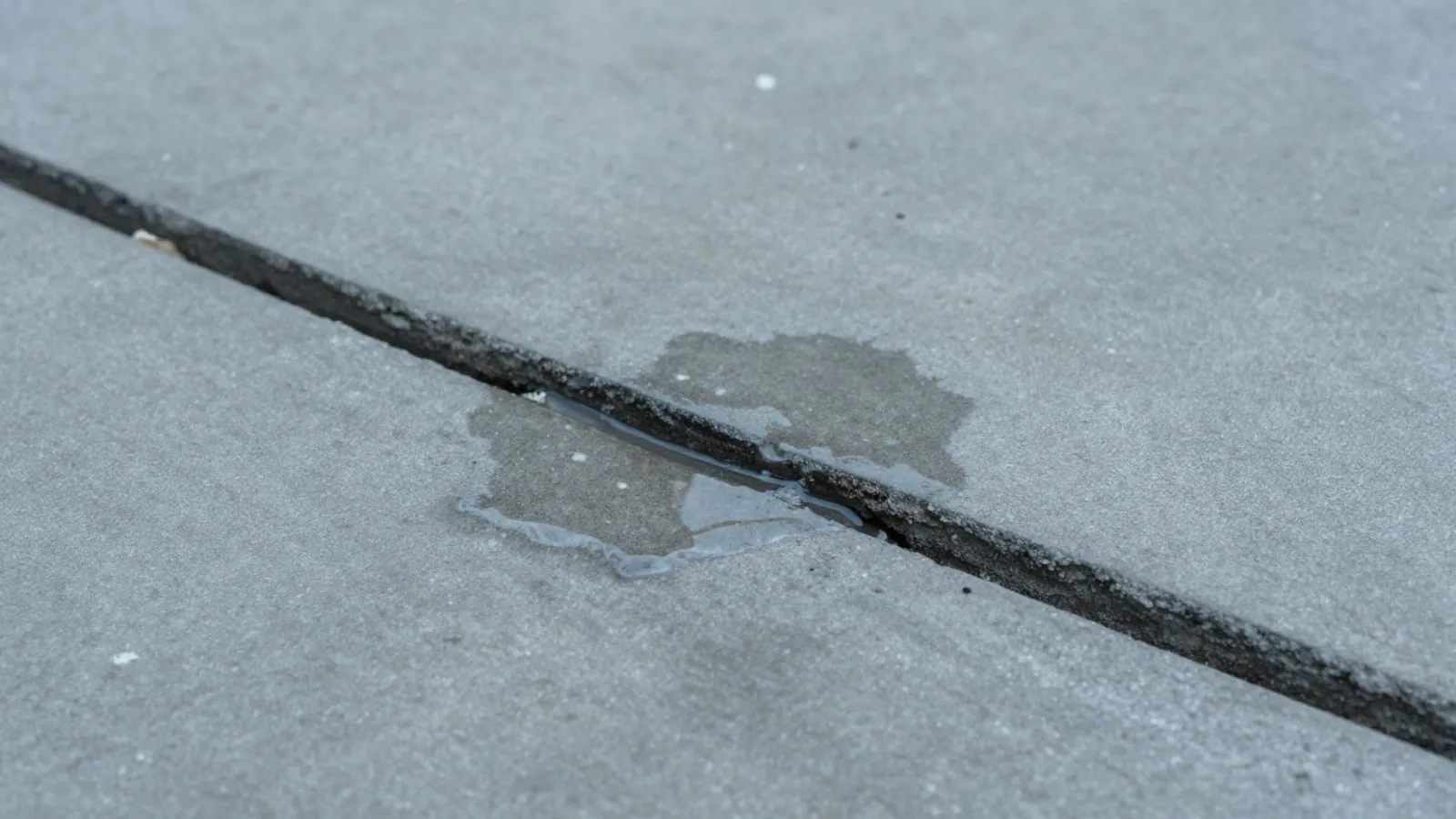
Slab leak water damage is the moisture damage caused by a leaking pipe in or under a concrete slab foundation. If you notice warm spots on the floor, the sound of running water with every tap closed or a sudden jump in your water bill in your Wyandotte, MI home, close the main valve and call. The 24/7 dispatch line is open if water is surfacing.
A slab leak is hard to diagnose because the pipe is hidden. The water travels through the slab and soil, then shows up at an edge, a crack or a wall base. By the time a floor is wet, the leak has usually been running for some time.
Signs that point to a leak under the floor
If you are wondering why a floor is warm, why the meter keeps moving or why a wall base is damp with no obvious source, these are the clues.
Warm or hot spots on the floor
A hot water line under the slab is leaking and heating the concrete.
The sound of running water
A hiss or trickle is heard with every fixture off.
A water meter that keeps moving
Close the main valve at the house and check whether the meter still turns.
A sudden jump in the water bill
Usage rises with no change in habits.
Damp carpet, cracks or musty smells
Water is coming up through the slab or at its edges.
Several of these signs have other causes, so a leak detection company or plumber should confirm the leak. Restoration begins after the source is located and repaired, though the drying crew can document and begin drying visible water right away.
What happens next
The sequence is simple. Shut off the water, confirm the leak with a plumber or leak detection service, and repair or reroute the pipe. Some repairs require cutting the slab or running a new line through the walls or ceiling instead.
The restoration crew then extracts standing water, removes wet flooring and baseboards, and dries the structure. Concrete holds moisture, and floor coverings laid over it trap vapor, so slow drying and moisture tests before new flooring matter. A wet subfloor, if there is one above the slab, follows the process shown on the structural drying page.
| Stage | Who | What happens |
|---|---|---|
| 1 | You | Close the main valve and check the meter |
| 2 | Plumber or leak detection | Confirm and locate the leak |
| 3 | Plumber | Repair or reroute the line |
| 4 | Restoration crew | Extract, remove wet materials, dry |
| 5 | Flooring installer | Test moisture, then install new flooring |
Floor warm or water bill spiking?
Close the main valve to see if the meter stops, then call. Describe what you are noticing.
Slab leaks and Wyandotte homes
Slab foundations are one of several foundation types in the region, and many Wyandotte homes have basements or crawl spaces instead. A house with a slab, an addition or an attached garage may have lines buried in concrete. Without a local statistic to rely on, the sensible rule is mechanical: any home with water lines under a slab can have this problem, and any home on a slab should know where the main shutoff is.
Wyandotte Municipal Services supplies the city's water, and a usage spike on your bill is worth following up. The city's Engineering and Building Department can say whether plumbing repair work needs a permit. When flooring is involved, the carpet and hardwood pages describe what happens to each floor type.
Once the line is repaired, the drying and moisture testing follow the ANSI/IICRC S500 standard.
What decides the cost
Leak location and access
A line that can be rerouted costs differently from one that needs the slab opened.
How long it ran
Weeks of seepage means more wet material than a recent break.
Flooring above
Tile, wood and carpet each respond differently.
Moisture in the slab
Concrete takes time to dry before new flooring goes down.
Rebuild scope
Repairs to slab, walls and finish flooring are separate from drying.
Coverage for slab leaks varies. Some policies cover the resulting water damage but not the cost to reach the pipe, and long-term leaks are often excluded. Check your policy and ask your insurer before work begins. Keep your water bills for comparison. For your real number, call (844) 950-6900.
Slab leak questions
Yes. The dispatch line is open 24 hours a day, every day. Call if water is surfacing or flooring is wet. Same-day response is available when crews are free.
It can be, especially if a hot water line runs below. Radiant heat, sun and heating ducts can also warm floors, so a plumber should confirm.
Close all fixtures, note the meter reading, wait an hour without using water and look again. If it moved, there is a leak somewhere.
Usually a plumber or leak detection service does. The crew dries the structure.