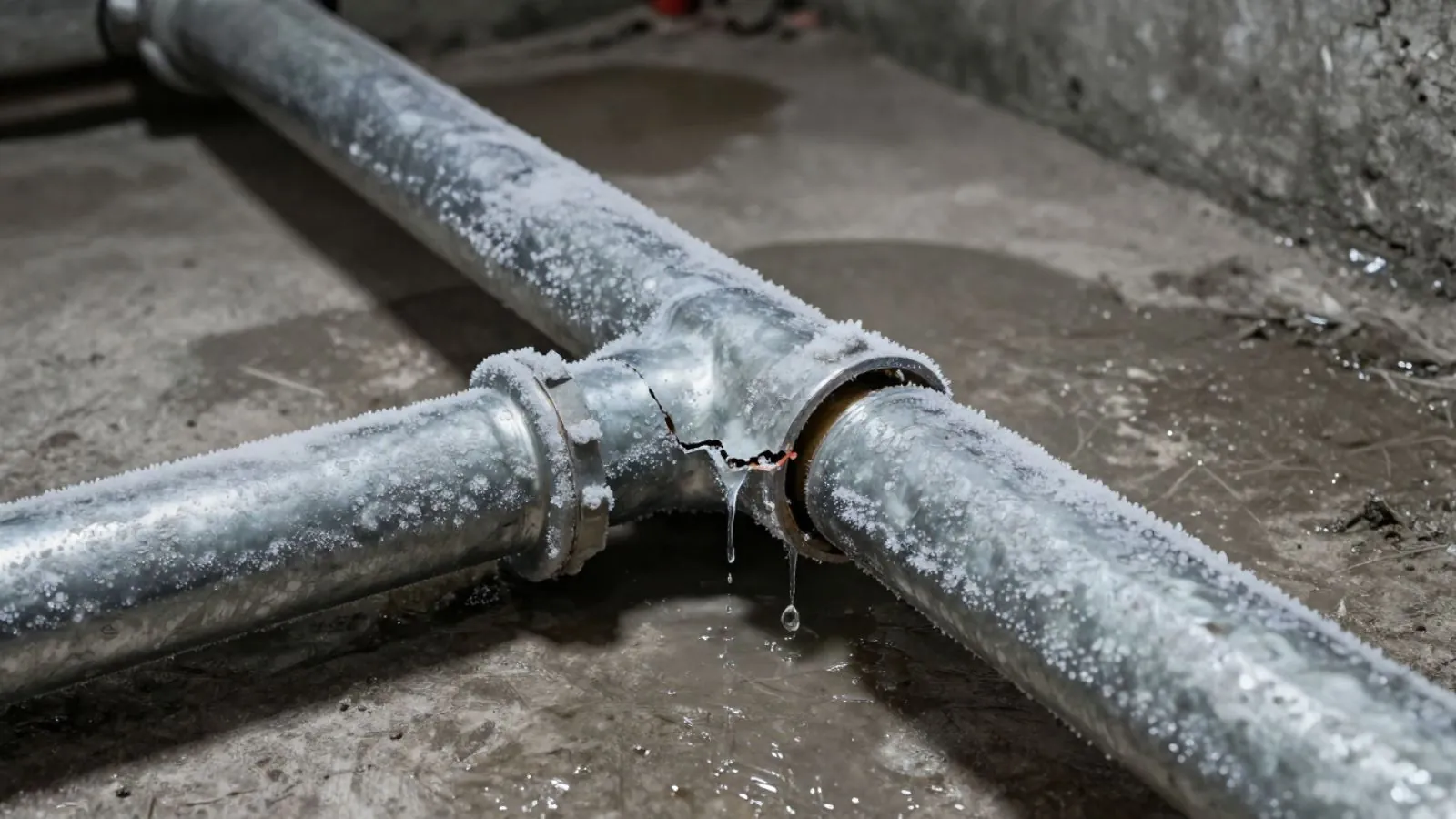
Frozen pipe water damage is the flooding that happens when ice inside a water line expands, splits the pipe and then releases water as it thaws. If a pipe in your Wyandotte, MI home is frozen or has just burst, close the main water valve and call. The 24/7 dispatch line is open, and thawing is when the real flooding often begins.
Ice does not usually break a pipe at the frozen spot. Pressure builds between the ice blockage and the closed faucet, and the pipe splits where the pressure is highest. The split may be small and hidden until the ice melts, at which point water pours out.
What to do in the first minutes
Time matters because a split pipe can release gallons every minute once the ice clears. Move quickly and safely.
- Find the main water shutoff and close it before anything thaws.
- Open the faucet nearest the frozen pipe so water has a place to go as it melts.
- Never use an open flame or a propane torch to thaw a pipe.
- If water is near the electrical panel or outlets, stay away and call 911 or the utility.
- Photograph the pipe, the wall and any damage before moving things.
If the pipe has already burst, the burst pipe page explains the shutoff and extraction steps in more detail. If the frozen pipe is only a suspect, a hair dryer at low heat on an exposed section is safer than any flame, but a pipe inside a wall is a job for a plumber.
Why pipes freeze in Michigan homes
Pipes freeze where cold air reaches them. In Michigan the usual spots are exterior walls, unheated crawl spaces, garages, attics and runs under kitchen sinks on cold sides of the house. A cold snap with wind makes it worse, because moving air strips heat from a wall faster than still air does.
NWS Detroit climate normals for 1991 to 2020 show about 45 inches of snow in an average year, and winters here are long enough that a pipe that survived last year can fail this one. The mechanism, not a statistic about local plumbing, is what matters here. Any pipe in an unheated or poorly insulated space is exposed.
Pipe frozen or just burst?
Close the main water valve first, then call. Tell the line which room the pipe is in.
What the cleanup involves
After the water is shut off and the plumber has repaired or replaced the pipe, the crew extracts standing water and checks the wall, ceiling and floor with moisture meters. Wet insulation and soaked drywall are removed, and the cavity is dried with air movers and dehumidifiers. Because freeze splits can be inside walls, crews often find wet areas well beyond the obvious one.
Frozen pipes also affect homes while the family is away. A split in a vacant house can run for days, which is why the water extraction page and the structural drying page describe the longer cleanup after a long run.
| Location of freeze | Typical damage |
|---|---|
| Exterior wall | Wall cavity, insulation, baseboard |
| Under a sink | Cabinet base, flooring |
| Crawl space or basement | Subfloor, insulation, lower level |
| Attic | Ceiling below, insulation |
Preventing a repeat
Keep the heat on when you travel and open cabinet doors on cold exterior walls so warm air reaches the pipes. Insulate exposed lines and seal gaps where cold air enters, and know where your main shutoff is before you need it. Wyandotte Municipal Services supplies the city's water, and your water bill is a quick check for unseen leaks if usage jumps.
If a plumber replaces a line, ask the Engineering and Building Department whether the work needs a permit. Insulating lines is usually a homeowner job, but replacing them is plumbing work.
Drying goals after a burst follow the ANSI/IICRC S500 standard, which sets how wet materials are measured and when they count as dry.
What decides the cost
How long the pipe ran
A split caught in minutes costs far less than one that ran overnight.
Location
A pipe in an exterior wall or ceiling damages more finished material.
Materials wet
Insulation, drywall, flooring and cabinets each add steps.
Floors affected
Water that drops to a lower level adds area.
Rebuild scope
Drywall, paint and flooring replacement are separate from drying.
Sudden pipe bursts from freezing are often covered, but policies can require that you kept the heat on and took reasonable steps. Check your policy and ask your insurer. Keep the failed pipe section and photos. For your real number, call (844) 950-6900.
Frozen pipe questions
Yes. The dispatch line is open 24 hours a day, every day, including holidays and cold snaps. Call, close the main valve and describe what you see. Same-day response is available when crews are free.
If it is exposed and not yet split, low heat from a hair dryer is safer than any flame. If the pipe is inside a wall, call a plumber.
Water stains, dripping sounds, a drop in pressure or a wet wall after the thaw are the signs.
It can if the cold exposure is not fixed. Insulation and heat are the usual remedies.