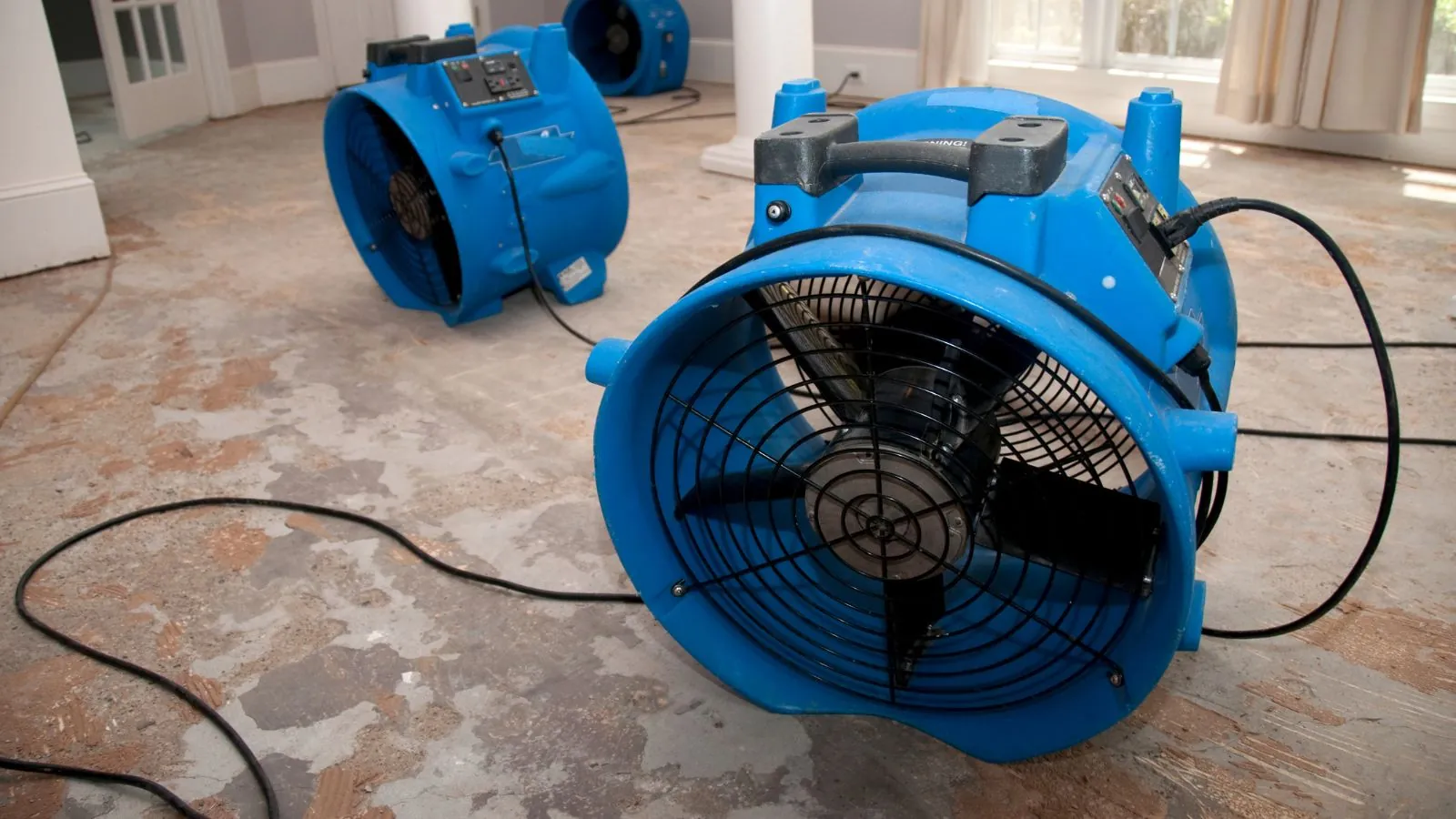
You can dry a small area yourself when the water was clean, the wet area is limited to a few square feet of hard flooring or carpet, and you act within the first day. A professional crew is the better choice when the water was contaminated, when it soaked walls, insulation or subfloor, or when it has been wet for more than a day or two. The reason is not the fans, but the measurement.
Wet materials hold water that fans on the surface cannot reach. Professionals use meters to find it and dehumidifiers to remove it, and the difference shows up days later when a wall that felt dry starts to smell.
What you can handle yourself
Some losses are small enough for a homeowner. A glass of water on a hardwood floor, a puddle from a spilled bucket, a toilet overflow of clean water onto a bathroom tile floor and a damp bath mat all fit. Remove the water quickly, run fans and a household dehumidifier and keep an eye on the area for a few days.
For these cases the steps are simple. Soak up standing water with towels or a wet vacuum, lift rugs and furniture, open windows if the weather is dry and run a fan across the surface. Keep the area under watch for cupping floors, stains or smells.
When to bring in a crew
| Situation | DIY realistic? | Why |
|---|---|---|
| A few square feet of clean water on tile | Yes | Hard surface, little absorption |
| Carpet and pad soaked by clean water | Borderline | Pad usually has to be replaced |
| Water inside a wall or ceiling | No | Cavities need meters and drying equipment |
| Drain, sewer or flood water | No | Contaminated, needs protection and disposal |
| Wet more than a day or two | No | Materials degrade and odors begin |
| Hardwood floor cupping | No | Slow, controlled drying matters |
| Basement with finished space | No | Many materials, large volume |
For the contamination case, see the sewage backup cleanup page. For soaked flooring, the carpet and hardwood pages explain what happens next.
Not sure which side of the line you are on?
Describe the water, the area and how long it has been wet. A quick conversation can tell you whether DIY is realistic.
The equipment gap
Rented fans move air, but they do not remove moisture from the structure. A professional dehumidifier is sized for the room and produces dry air that pulls water out of materials. Moisture meters and thermal cameras show where the water is hiding. Without them you are guessing, and a guess that a wall is dry is wrong often enough to cause trouble.
The risks of DIY
The main risks are incomplete drying, contaminated water mistaken for clean, electrical hazards and overlooked hidden damage. Incomplete drying leads to odors, warped materials and a bigger repair later. Contaminated water exposes you to bacteria and viruses. And running electrical equipment on a wet floor is dangerous, so use a ground fault circuit interrupter and keep cords out of water.
- Never stand in water near a plugged-in device or an outlet.
- Treat water from a drain, toilet bowl overflow with waste or outdoor flooding as contaminated.
- Wear gloves and boots, and wash after contact.
- Do not use a household vacuum on standing water.
- Stop and call for help if anything feels beyond your tools.
Cost versus risk
DIY looks cheaper, and for a small loss it is. For a larger one, the cost of drying wrong is higher than the cost of drying right. Rebuilding a floor or wall that failed because it was not dried properly costs far more than the drying itself. The question to ask is not what the equipment costs, but what the damage costs if the drying fails.
Insurance matters too. Documentation from a drying crew can support a claim, and a homeowner's rental equipment leaves no readings. If you are unsure whether the loss is covered, see your policy and ask your insurer before you decide.
The water categories and drying goals referred to here come from the ANSI/IICRC S500 standard.
Climate and DIY in Wyandotte
Bringing outdoor air into a wet house only helps when that air is drier than the air inside. NWS Detroit's 1991 to 2020 normals show about 34 inches of precipitation a year, and Michigan summers can be humid, so opening windows does not always help. In winter the opposite problem appears, because cold outdoor air is dry but opening windows chills the house and risks frozen pipes.
For a loss in an older Wyandotte house, including homes in Glenwood and Ford City, plaster walls and plank floors can hold water longer than modern materials. That is another reason to measure rather than guess.
Homeowners in Southgate and Ecorse face the same trade-off, and the answer depends on water type, area and time, not the town.
What professional drying adds
A crew brings more than equipment. It brings a method: classify the water, extract, remove what cannot dry, place air movers and dehumidifiers and monitor until the readings reach the target. It also brings records that support an insurance claim. The method is described step by step in the water extraction page and the other drying pages, and it explains why professional drying tends to be faster and more reliable than a rented fan.
That does not mean every spill needs a crew. It means the dividing line is about measurement and risk, not pride.
A decision shortcut
Ask three questions. Was the water clean? Is the wet area smaller than a bath mat's worth of floor? Did you catch it within a day? If all three are yes, DIY is reasonable. If any one is no, get a measurement from a crew.
What a quick consult can tell you
A crew with a moisture meter can often tell in minutes whether a wall is wet inside. If you are unsure, a short visit is cheaper than a guess. Ask what the readings are and what the crew would do, then decide.
DIY questions
A fan dries the surface but not the cavity. Inside a wall, moisture needs controlled air movement and a dehumidifier.
If the water is spreading, call immediately. If it is a small clean spill, watch it for a day and call if anything is still wet.
For a small damp area, it helps. For a soaked room, it is too small to dry the structure in time.
Yes, humid weather slows drying, so what takes a day in dry air can take several in July.