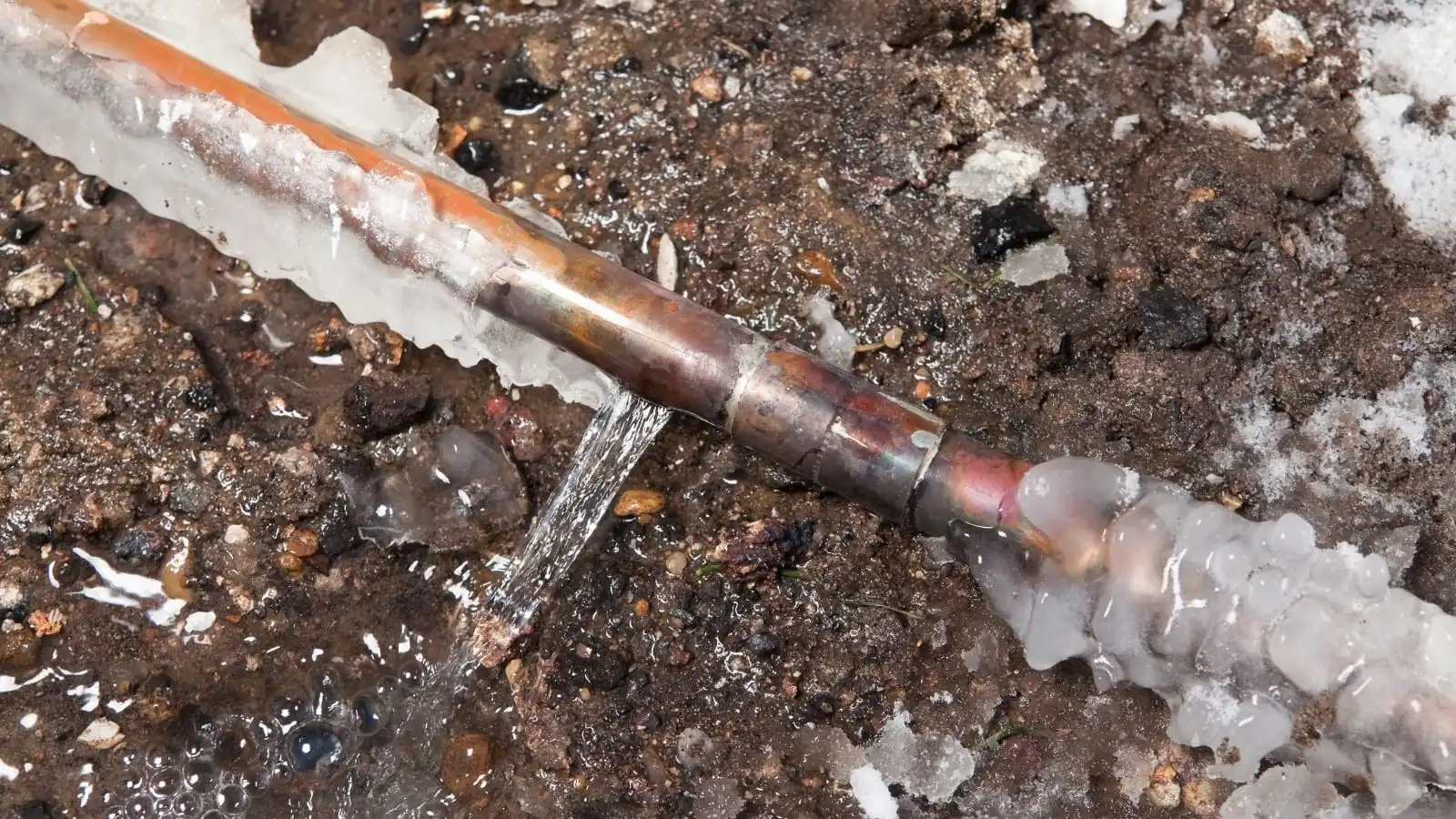
Homeowners insurance in Michigan often covers sudden and accidental water damage, such as a pipe that bursts or an appliance hose that fails. It often does not cover flood, groundwater seepage or sewer and drain backup unless you bought extra coverage. The wording of your own policy decides, so read it before you need it, and ask your insurer about anything unclear.
This guide explains how the common cases are treated, what Michigan's insurance regulator says about the gaps and what to do in the first days of a loss. It is general information, not legal or insurance advice.
Covered versus excluded: the usual split
Most policies cover damage from a "sudden and accidental" discharge of water from plumbing, heating or appliances. They usually exclude water that comes from outside the home or from the ground, and damage that develops slowly from a leak that was ignored.
| Cause of water | Often covered by a standard policy? | What to check |
|---|---|---|
| Burst or frozen supply pipe | Often yes | Whether heat was kept on |
| Appliance hose or line failure | Often yes for the damage, not the appliance | Sudden versus long-term |
| Roof leak after wind or storm damage | Often yes | Condition of the roof |
| Rising flood water or groundwater | Usually no | Separate flood policy |
| Sewer or drain backup | Usually no without an endorsement | Water and sewer backup endorsement |
| Slow leak over weeks or months | Often excluded | Wear and maintenance language |
The Michigan Department of Insurance and Financial Services (DIFS) says flood is not covered by standard homeowners policies and that water and sewer backup needs an endorsement. DIFS recommends that homeowners ask about that coverage before a loss, since it cannot be added after water is already in the basement.
Words that matter in the policy
A few phrases decide most disputes. The phrase sudden and accidental means the water was released quickly and unexpectedly. Continuous or repeated seepage is the language used to exclude slow leaks. Water backup or sump overflow coverage is usually a separate endorsement. It has its own limit, which can be far lower than the dwelling limit.
Look for three numbers on your declarations page: the deductible, the limit for water backup if you have it, and the limit for personal property. A basement with finished space, furniture and stored items can exceed a small backup limit quickly.
Not sure what your policy says?
Your insurer decides coverage, but a dry-out crew can document the loss. Describe what happened and ask what to photograph first.
What to do in the first days
Insurers expect you to protect the home from further damage once a loss occurs. That means stopping the water, removing standing water and drying the structure, and keeping receipts. Waiting for an adjuster before taking those steps can make the loss larger and the claim harder.
- Stop the source and make the area safe.
- Photograph and video the damage before moving anything.
- Keep damaged items you can safely store until the adjuster has seen them.
- Save receipts for emergency drying, hotel stays and repairs.
- Call your insurer, ask for the claim number and write down the name of the person you spoke with.
A restoration crew can document moisture readings, affected areas and the drying plan, which gives the adjuster a record of the scope. See the water extraction page and the structural drying page for how that work is logged. The crew does not decide coverage, and the insurer does.
Backup claims and municipalities
Sewer backup can involve a public line, and in that case Michigan's Public Act 222 of 2001 matters. The law sets a written notice requirement of 45 days after you discover the damage for certain claims against a municipality. Write down the date and time you first noticed the water, and keep that note with your photos.
The same statute describes conditions that can affect a claim, so ask the city or an attorney about your specific facts. The sewage backup cleanup page explains what happens to the structure after contaminated water.
Deductibles and what is left over
Even a covered loss leaves you with the deductible and whatever the policy excludes. If the loss is close to the deductible, filing may not change much, and a claim on your record can matter at renewal. Ask your agent how a claim would affect your policy before deciding, and keep in mind that the insurer, not a restoration company, decides whether to pay.
Common mistakes
Three mistakes show up again and again. People throw away damaged items before photographing them. They assume flood coverage is included. And they wait days to start drying, which turns a small covered loss into a larger one with a dispute about what was sudden.
What this looks like in Wyandotte
Wyandotte homeowners sit on the Detroit River, and the August 2014 storm, declared a disaster by FEMA (DR-4195) for Wayne County, showed how quickly rain can overwhelm drains. NOAA reported four to six inches of rain in about four hours. Those are exactly the events where the gap between a standard policy and a water and sewer backup endorsement shows up.
The city's water service comes from Wyandotte Municipal Services, a community-owned utility that has run the water system since 1889. If your claim involves the public water or sewer line, ask the city which office handles the record, and ask the Engineering and Building Department about permits for repairs.
Neighbors in Southgate and Ecorse face the same policy language, but their city offices, utilities and sewer systems are different, so confirm which one applies to your address.
Questions to ask your insurer
Ask whether your policy includes water and sewer backup coverage and what the limit is. Ask how it treats a sump pump failure, and whether storm water entering through a window well counts. Ask what documentation they want, and whether there are time limits for reporting a loss. Write the answers down.
Insurance questions
Often yes for the resulting water damage, if the burst was sudden and the home was maintained. Your policy may also require that you took reasonable steps, such as keeping heat on. Ask your insurer.
Usually only with a water and sewer backup endorsement, which is separate from the base policy. DIFS recommends asking about it before a loss happens.
Policies commonly exclude damage from long-term seepage or poor maintenance. A written explanation from the insurer should state the reason, and you can ask for it.
Usually not. A renter's policy covers your belongings, while the landlord's policy covers the building.