The best way to prevent water damage while you are away is to shut off the main water supply, keep the heat on in cold weather, and have someone check the house. Most vacation floods come from a few predictable failures, and each has a simple defense. A house that is empty for days has nobody to catch a drip, so the plan has to work without you.
This checklist is general home maintenance advice and is not a substitute for a plumber's inspection of your own plumbing.
Know where the main shutoff is
Find the main water valve before you leave, and test that it turns. Valves that have not moved in years can seize, and a seized valve is useless in an emergency. Label it so a house sitter can find it, and show them how it works.
Closing the main for a trip stops pressure on every pipe, supply line and appliance hose. It is the single most effective step, and it takes a minute. If you need water for a pet or a sprinkler system, close the individual fixtures instead.
The failure points to check
| Failure point | Why it fails | What to do before leaving |
|---|---|---|
| Washer hoses | Rubber cracks under pressure | Inspect, replace if bulged or old, close the valves |
| Dishwasher and ice maker lines | Fittings loosen or split | Check for drips, close the supply |
| Water heater | Tank corrosion, valve failure | Check the label date, consider turning the setting down |
| Toilet supply lines | Braided lines wear out | Look for rust or a bulge |
| Sump pump | Power loss or stuck float | Test it and consider a battery backup |
| Gutters and downspouts | Clogs and overflow | Clear them and extend discharge from the wall |
For more on how appliance failures behave, see the appliance leak page and the water heater leak cleanup page.
Already home to a wet floor?
Close the main valve first, then document and dry the area. Describe what you found and ask what to do next.
Winter trips need extra steps
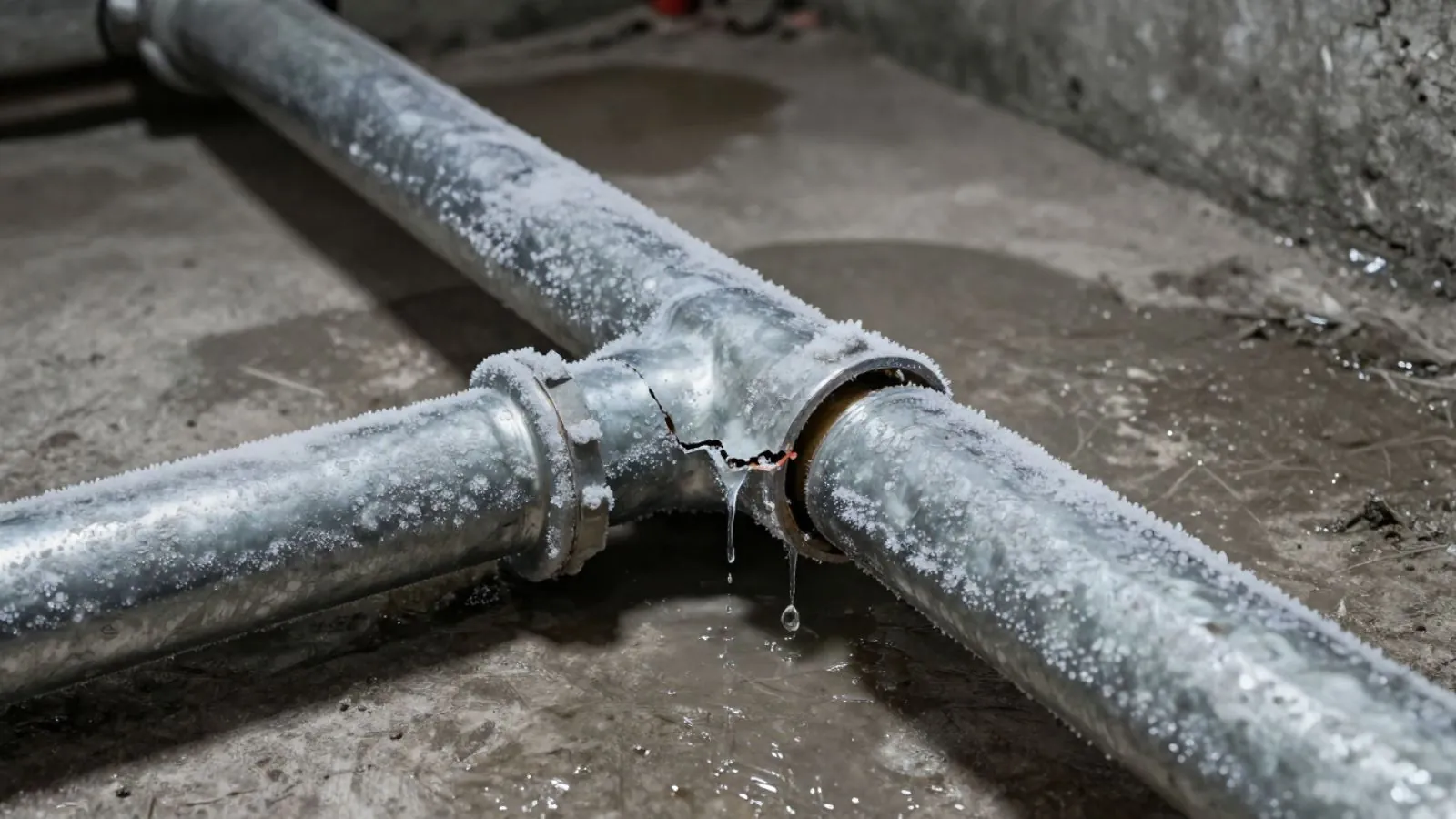
Michigan winters are the main reason for pipe failures in vacant homes. Keep the thermostat set at a temperature that protects the pipes, open cabinet doors on exterior walls, and insulate lines in garages and crawl spaces. If you plan to be away for a long stretch in deep winter, ask a plumber about draining the system.
NWS Detroit climate normals for 1991 to 2020 show about 45 inches of snow a year, which is enough for long cold spells in most winters. The frozen pipe page explains how freezing leads to flooding at the thaw.
Short trips versus long ones
The right level of protection depends on how long you will be gone. A night away needs little, while a month away needs a plan.
| Time away | Sensible steps |
|---|---|
| A weekend | Close the main valve, check under sinks before leaving |
| One to two weeks | Add a visit every few days and a water sensor |
| A month or more | Add a plumber's check, battery backup for the sump pump and an agreed contact |
| Winter absence | Keep heat on, open cabinet doors, ask about draining the system |
Walk the house before you go
A ten-minute walk-through catches the problems that cause most vacation losses. Start in the basement and look at the water heater, the sump pit and any floor drain. Check the washer hoses, then look under each sink and behind each toilet. Look at ceilings for stains and at windows for gaps where rain could enter. Fix a slow drip before you leave, since a drip that is small today can run for weeks.
Have someone check the house
A visit every few days catches a problem early. Ask a friend or neighbor to walk through, look under sinks and check the basement. Tell them where the shutoff is and whom to call. A smart water sensor on the floor near the water heater and washer can send an alert to your phone.
- Close the main water valve, or the valves on high-risk appliances.
- Set the thermostat to protect pipes in cold weather.
- Clear gutters and extend downspouts.
- Test the sump pump.
- Give a trusted person the shutoff location and a phone number.
- Put a water sensor near the water heater and washer.
If you come home to water
Close the main valve, stay out of water near outlets and photograph everything. Call your insurer and a restoration crew. Do not run the heat or fans at full blast before the crew has looked, since it can push moisture into walls. The water extraction page explains what happens next.
Clean-up after a failure follows the ANSI/IICRC S500 standard, which the dry-out pages on this site explain.
Wyandotte specifics to know
Wyandotte Municipal Services supplies the city's water and has done so since 1889, and a water bill that spikes while you are away is an early sign of a hidden leak. The city's Engineering and Building Department can say whether replacing a valve, heater or supply line needs a permit.
The August 2014 storm showed how quickly a vacant basement can fill during a heavy rain. NOAA reported four to six inches in about four hours, and FEMA's disaster declaration DR-4195 covered Wayne County. A working sump pump with a battery backup is a sensible hedge for any house that will be empty in storm season.
If your travel plans take you away from the river towns, the same checklist applies in Grosse Ile and Southgate, where the water systems and permit offices are different from Wyandotte's.
Prevention questions
It is a good habit, and takes a minute. It removes the risk from every hose and fitting at once.
It lowers energy use and reduces risk if the tank fails, but it does not remove it. Check the label for the age of the tank.
Pour water into the pit before you leave and watch it run. A battery backup covers power loss during storms.
Close the main valve, stay out of water near outlets and call you and a restoration line.