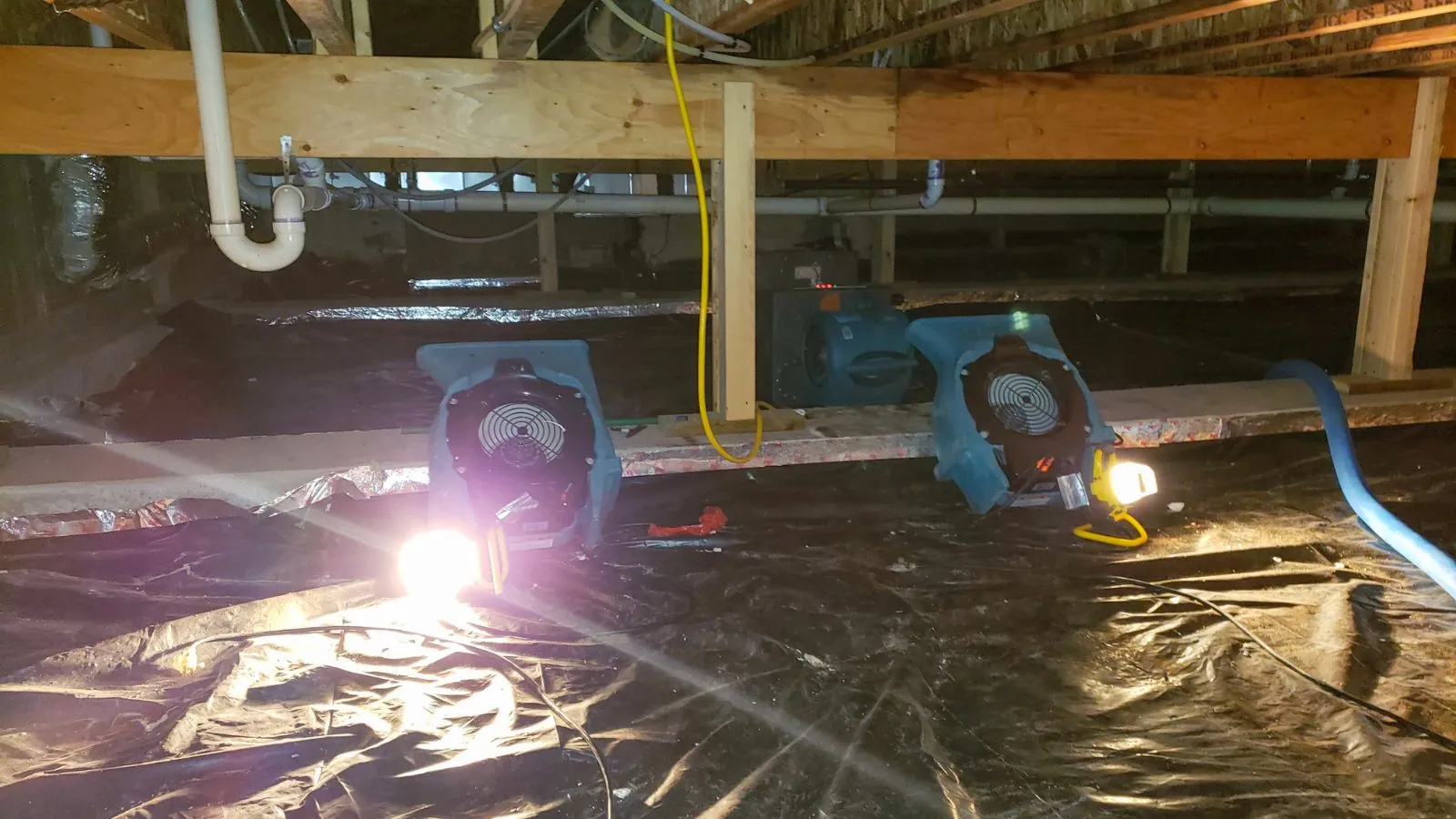
The best questions to ask a water damage restoration company are about scope, measurement and paperwork. Ask what will be done in each room, how dryness will be proven, what is excluded from the price and how the company works with your insurer. A reliable crew answers clearly and in writing, and a vague answer is information too.
Hiring under pressure is when mistakes happen, so keep this list on your phone. The questions apply to any company and any size of loss.
Before they arrive
Ask how soon someone can start, and what the crew will do first. Be wary of promises that sound too exact before anyone has seen the house. Ask whether the first visit includes moisture readings, and whether the person who arrives is the person who will run the job.
Ask whether the company will explain the scope and price before work starts. That is the standard to hold every crew to, and it protects you from surprises on the invoice.
Scope and method
| Question | A good answer sounds like | A weak answer sounds like |
|---|---|---|
| What water category is this? | Names the category and the reason | Says it is all the same |
| What will you remove? | Lists materials and heights | Says they will see |
| How will you dry it? | Names equipment and placement | Says it just needs fans |
| How do you know it is dry? | Daily readings against a reference | Says it feels dry |
| What happens if readings stall? | Explains what they will check | Has no plan |
The structural drying page explains the measurements to expect, and the water extraction page covers the first stage.
Comparing bids after a loss?
Ask the questions below of any crew, including ours. Describe your loss and see how clearly the answers come.
Pricing and paperwork
Ask what the quote includes and what it leaves out. Drying and rebuild are different stages, and a quote for one does not cover the other. Ask whether the price is a fixed scope or based on time and equipment, and what happens if the scope changes. Ask for the scope, the equipment list and the terms in writing before you sign.
Do not look for exact prices on a website, because a fair number needs a real look at the loss. A company that quotes a precise figure over the phone for an unseen job is guessing.
- A written scope split by room and stage
- The equipment list and the daily monitoring log
- A copy of the work authorization before you sign
- Proof of liability coverage for the company
- Photos taken at the start and the finish
Insurance questions
Ask how the company documents a loss for an insurer and whether it will share readings and photos. Be careful with any company that says it will "handle" the claim, since your insurer decides coverage and you remain the policyholder. Ask whether the company will bill you or the insurer, and how an unpaid balance is handled if the insurer pays less.
Check your own policy, and ask your adjuster how much of the work is covered.
Safety and contamination
Ask how the crew handles contaminated water, and whether they use containment for sewage. Ask how they protect clean rooms and what personal protective equipment they use. The sewage backup cleanup page describes what a Category 3 job should look like.
Red flags
Be cautious with a company that pressures you to sign at the door, asks for full payment upfront, refuses to provide a written scope, will not explain the drying plan or says all materials must be removed without showing readings. A company that shows up uninvited after a storm and has no local address is another warning sign.
Local checks in Wyandotte
A company that works in your area should know the local offices. In Wyandotte, building matters go through the Engineering and Building Department, and the city's electrical code adopts the 2023 National Electrical Code, so ask whether the company will coordinate any permit-triggering repairs. Water service comes from Wyandotte Municipal Services, a community-owned utility, which is the right office for questions about the public supply.
Ask how the company has handled storms like the August 2014 event, when FEMA declared disaster DR-4195 for Wayne County after NOAA reported four to six inches of rain in about four hours. A crew that worked those weeks will talk about triage, contamination and documentation in concrete terms.
If you are comparing crews that serve Riverview or Grosse Ile, ask where the company is based and how many calls it can take in a storm.
Questions about people and equipment
Ask who will be on site and whether they are employees or subcontractors. Ask how many people the job needs, and who supervises. Ask what equipment will be left in the house, how loud it is and who will check it each day. A crew that places equipment and returns daily to read the meters is doing the job. A crew that drops equipment and disappears is not.
Ask what the company will do if a reading does not fall as expected. A good answer mentions checking for a hidden source, adding equipment or opening a cavity. A weak answer blames the house.
Questions to ask yourself
Do you understand the scope and the price? Did the company explain what it will not do? Do the answers match across the people you spoke with? If you feel rushed, slow down. A water loss is urgent, but the choice of crew is worth ten minutes.
After the job
Ask for the final moisture readings, photos of the finished work and a summary of what was done. Keep the invoice, the scope and the log with your insurance records. If rebuild work follows, ask whether the drying company's records can be shared with the contractor.
Questions about hiring
If the loss is not an emergency, yes. If water is still spreading, stop the source and start extraction first, then compare scopes.
Many crews ask for one before starting. Read it, ask what it commits you to and keep a copy.
It can share documentation, but the policyholder is you. Your insurer makes the coverage decision.
Ask where crews are dispatched from and how the company handles nights and weekends, since storm calls often come in waves.