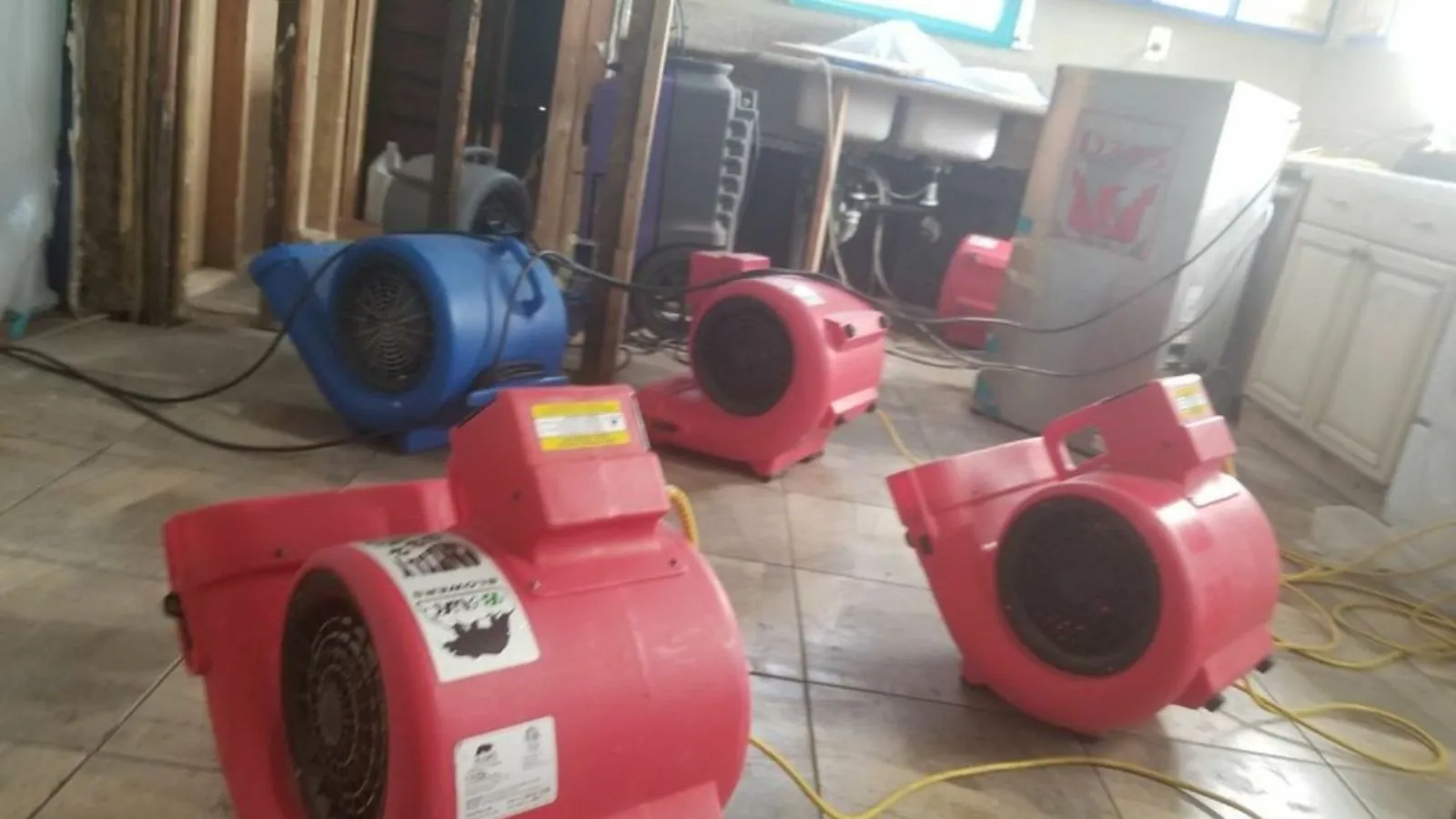
In water damage work, remediation usually means stopping the water, removing it, cleaning and drying the structure so the problem is contained. Restoration usually means returning the home to its condition before the loss, which includes rebuilding what was removed. Many companies use both words loosely, so the safest approach is to read the scope of work and see what each line actually covers.
Neither term is a legal standard in Michigan, and companies mean slightly different things by them. The ANSI/IICRC S500 standard is the industry's guide for water damage restoration, and it describes procedures rather than naming two separate jobs.
A working definition of each
Remediation is about the hazard. It stops the source, removes standing water, takes out materials that cannot be saved, cleans and disinfects and dries the structure until it meets a dry standard. The goal is a safe, stable building.
Restoration is about the result. It replaces drywall, insulation, flooring, trim, paint and fixtures, and returns finishes to a condition similar to before the loss. The goal is a finished home.
| Stage | Typical tasks | Typical result | Often done by |
|---|---|---|---|
| Emergency response | Stop source, extract water, protect contents | Water out, area safe | Restoration or mitigation crew |
| Remediation | Remove damaged materials, clean, dry, monitor | Dry, clean structure | Same crew |
| Restoration or rebuild | Replace drywall, flooring, paint, trim | Finished rooms | Rebuild contractor or same company |
Where the words overlap
Many companies bundle both stages, call the whole thing restoration and quote one price. Others sell only the drying and let a different contractor rebuild. Neither is wrong, but you should know which one you are buying. A quote for "restoration" that is only drying will not include new flooring, and a quote for "remediation" that mentions rebuild may be broader than you expect.
For the first stages, see the water extraction and structural drying pages. For the rebuild side of common rooms, the kitchen and ceiling pages show where drying ends and replacement begins.
Reading a quote that uses both words?
Ask what is included in each stage. Describe your loss and ask for the scope split by room.
Why the distinction matters for money
The two stages are priced differently. Drying is based on equipment, time and labor. Rebuild is based on materials and finish choices. If you accept a quote without knowing the split, you may pay for finishes you did not choose or discover that the price does not include them.
It matters for insurance too. An insurer may pay for emergency drying quickly and review rebuild scope separately. The adjuster may also have a preferred approach or pricing guide. Ask the insurer how it handles each stage, and get both scopes in writing.
- Does this price end when the building is dry, or does it include new materials?
- Which materials will be removed, and which will be replaced?
- Who handles permits and inspections for the rebuild?
- Is paint included, and to what level?
- What happens if the drying readings change the plan?
Sequencing and handoffs
A good job has a clean handoff. The drying crew documents that readings are at the target. The rebuild contractor then starts with a dry structure, which protects new materials from trapped moisture. If the same company does both, ask for a sign-off on the readings before rebuild begins.
Some work needs a permit. Electrical, plumbing and structural repairs after a loss can trigger inspections, and the rebuild contractor is usually the one who coordinates them. Ask who will do that and whether the cost is in the quote.
Choosing one company or two
One company can be convenient, since there is no gap between drying and rebuild. Two companies can be cheaper or better, because you can compare bids for the rebuild. A drying crew with no rebuild arm has no reason to inflate the demolition, and a rebuild contractor can bid on a clear scope. Either way, insist on clear, written scopes.
Safety steps first: stop the source, stay out of water near outlets and keep people away from contaminated areas.
How this plays out in Wyandotte
Wyandotte's Engineering and Building Department handles permit questions for rebuild work, and the city's electrical code adopts the 2023 National Electrical Code. A rebuild that opens walls in an older home, such as the houses in Glenwood or Ford City, may expose wiring or plumbing that needs attention, so ask the contractor how surprises will be handled.
After the August 2014 storm, FEMA declared disaster DR-4195 for Wayne County, and many households found that drying was quick but rebuild took months because contractors and materials were in demand. Planning for that gap, and keeping the structure dry in the meantime, protects the work already done.
Neighbors in Southgate and Grosse Ile make the same choices with their own city offices and permit rules.
How to read a bid
Look for line items. Extraction, demolition, equipment days, cleaning and monitoring belong to remediation. Drywall, insulation, flooring, paint, trim and cabinets belong to restoration. If the bid is a single lump sum, ask for a breakdown. Compare bids by scope, not by total price.
A worked example
Take a washing machine hose that fails in an upstairs laundry room. Emergency response stops the water and extracts it from the floor. Remediation removes the soaked flooring, opens the wall base and the ceiling below where water dropped and dries the framing. Restoration then replaces the ceiling drywall, the wall base, the flooring and the paint. The first two stages might take a week, and the last could take weeks more, depending on materials.
If a single quote covers only the first two stages, it should say so. If it covers all three, it should list each material and finish. Either way, you can see what you are paying for, and you can compare it with a second bid line by line.
When the words are used as marketing
Some companies use "remediation" to sound more technical and "restoration" to sound more complete. Do not let the word decide. Ask for a scope, ask what is excluded and ask how dryness will be proven.
Terminology questions
Not exactly. Remediation focuses on removing the problem and drying, and restoration returns the home to its prior condition. Companies often use the terms loosely.
If materials were removed, yes, you need rebuild after drying. A small loss that dries in place may need no rebuild.
It may, depending on coverage. Policies treat sudden losses differently from excluded causes. Ask your insurer.
The Engineering and Building Department. Ask before replacing wiring, plumbing or structural parts.